
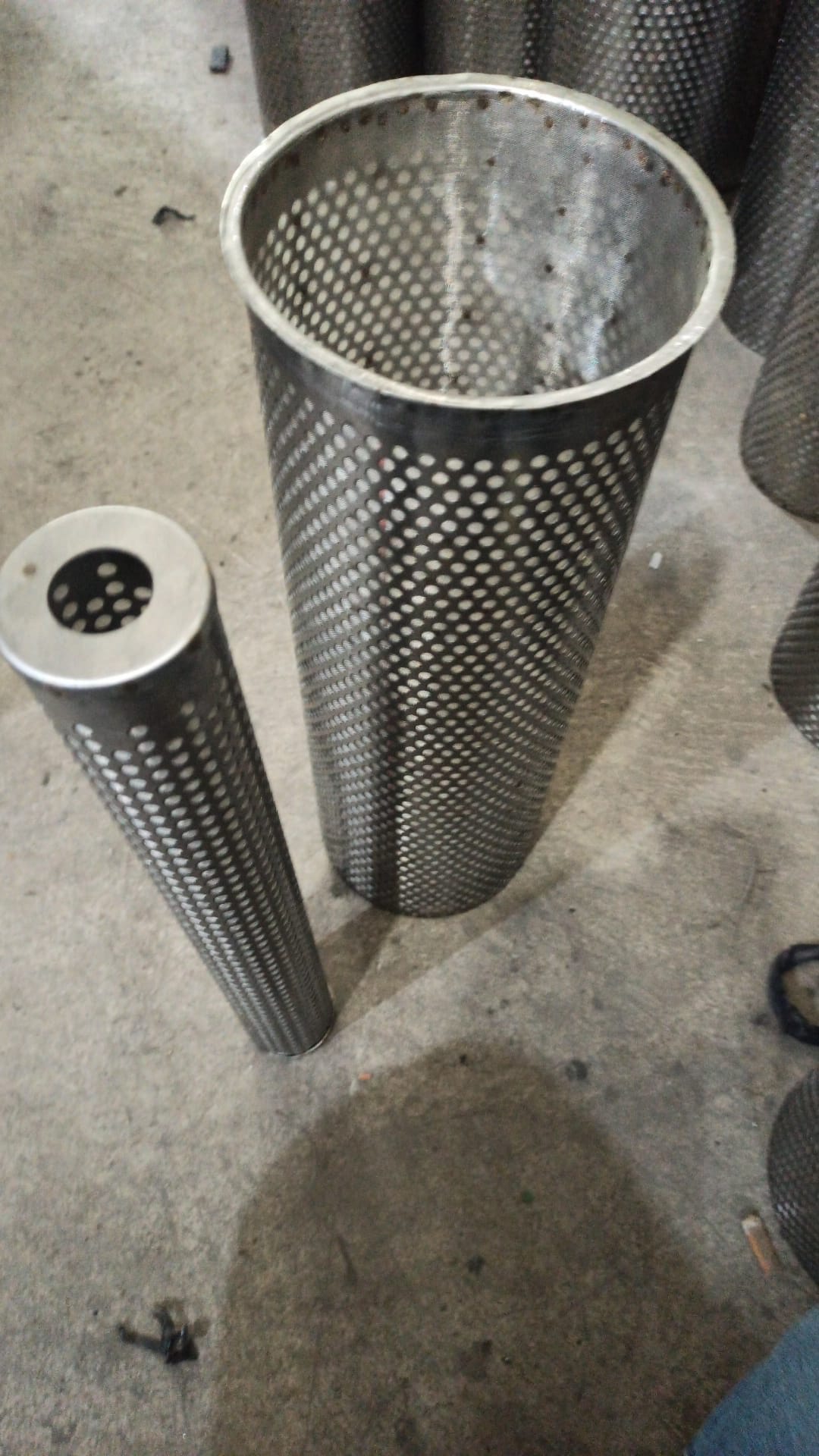
Start with the filters you’ll clean
Car and van filters fit a car-sized cabinet. Filters from trucks, buses, plant and agricultural machinery need a much longer working space, which is why heavy-duty work is a separate machine rather than an option on a smaller one. Measure the largest filter you want to accept, including flanges, brackets and any pipework or sensor bosses that stay attached, and compare it with each machine’s working space.
Size the machine for the filters you see regularly, not for the rare exception. A car and van workshop that meets an occasional truck filter is usually better served by sending that job away than by housing a large-format machine for it. The reverse mistake costs more: a fleet workshop with a car-sized cabinet turns work away.
Component types matter too. Some machines are presented as cleaning catalysts, EGR valves, intercoolers or radiators as well as DPFs, but supported types are confirmed model by model, and several are still awaiting approval for the METClean range. If a second service is part of your plan, treat it as unconfirmed until it appears below.
- METClean S working space
- 0.82 m³
- METClean E component types
- DPF, GPF, CAT, Intercooler, Radiator and EGR
- METClean S component types
- Awaiting approval
- METClean XL Multi+ component types
- DPF, SCR, EGR, Radiator and Intercooler
Where it will work, and what your site supplies
A cabinet on the workshop floor suits a garage that removes filters on its own ramps or receives them from other garages. It needs floor space, a route for lifting filters in and out, and a fixed connection to power, air and water. A van-mounted machine suits a mobile business that collects, cleans and returns filters, or cleans at the customer’s premises. A bench machine suits a smaller workshop that wants an off-vehicle service without giving floor space to a cabinet.
Each location brings its own constraints. A van installation depends on payload with a full tank, secure mounting, the power source and how used water is held until it can be disposed of, all confirmed for each vehicle. A bench machine still needs workshop air and somewhere to fill and empty its tank. Wherever it goes, check power, compressed air, water and a waste route before choosing, not after delivery; the site guide covers each one.
How much the machine does for you
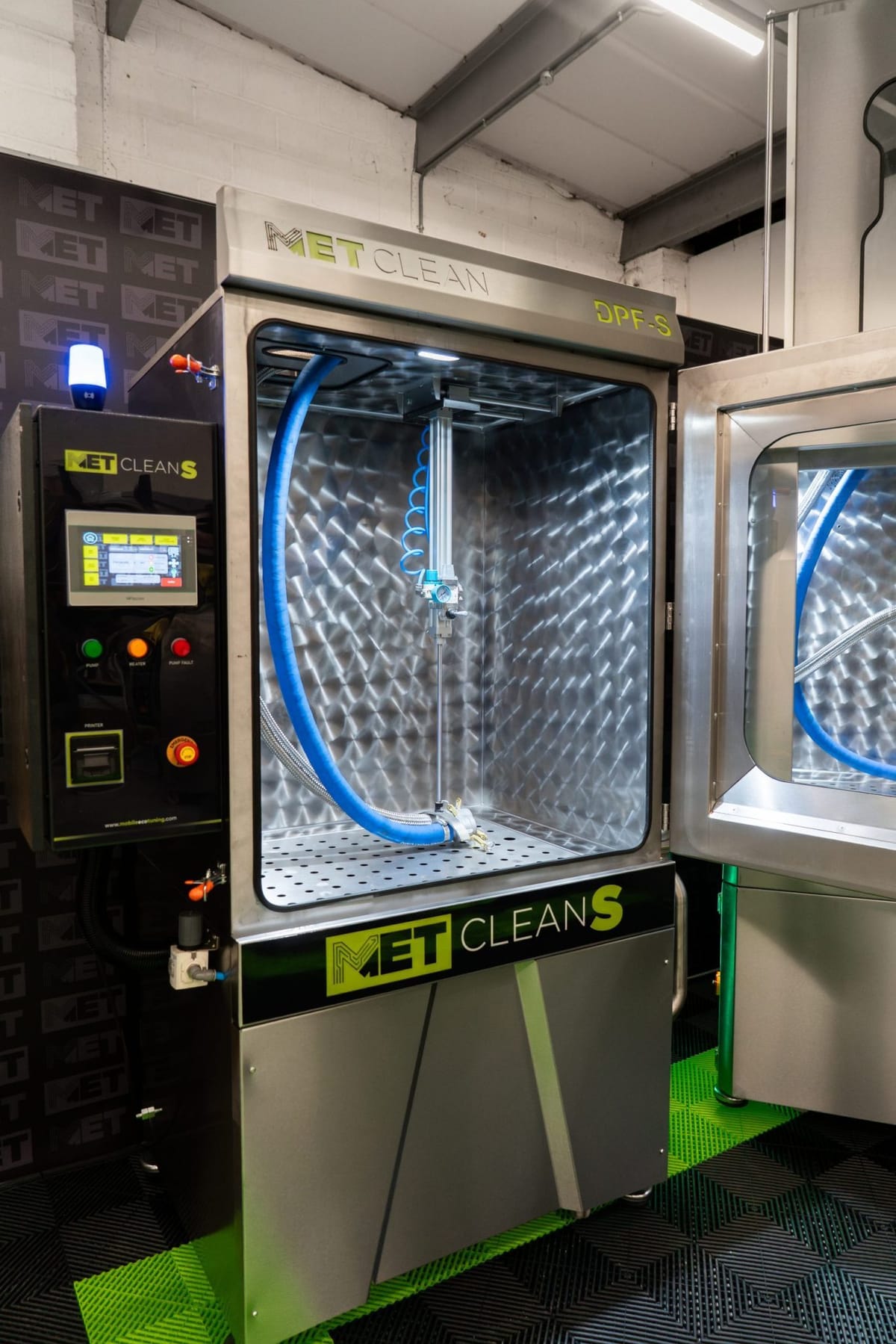
Every METClean DPF machine needs a technician to inspect the filter, fit the right adaptor, secure it and unload it afterwards. What differs is what happens in between. A simpler machine runs its wash from front-panel controls and clears water with compressed air. An automated machine adds a pressure test before and after the wash, a touchscreen to set the programme, heated drying in the cabinet and a printed record of the job.
The test and printout matter more than they first appear. A reading taken before the wash tells you what you started with, so you can decide whether a clean is worth doing and explain it to the customer. The after reading and the printed record give the customer something to keep. A test reading is not a guarantee that a filter is serviceable, but it is a consistent record that a workshop selling cleans to other garages will be asked for.
Drying is the other practical difference. A machine that only purges with compressed air leaves some filters needing their final drying on the vehicle, which suits a workshop refitting its own customers’ filters but is awkward when filters go back to another garage. Even heated drying has limits: some heavily saturated filters, mainly combined DPF and catalyst units, won’t dry fully in a machine.
- METClean E control
- Analogue
- METClean E drying
- Cold air purge
- METClean S control
- Touchscreen, automatic programme
- METClean S drying
- Hot dry and cold purge
- METClean S pressure test
- Yes, before and after cleaning
- METClean S printout
- Yes, company, operator, customer, filter serial number
- METClean V drying
- Cold air purge
Where each METClean fits
Once those decisions are made, the range sorts itself. Each machine is described here by the work it suits, not by a ranking; the comparison sets their approved specifications side by side.
- METClean E
- Car and van filters, analogue control and a compressed-air cold purge; the lower-cost cabinet.
- METClean S
- Car and van filters with a pre-test, touchscreen programmes, heated drying and a printout.
- METClean V
- A compact cabinet designed around a van, for collection, clean and return services.
- METClean XL Multi+
- Large-format filters from trucks, buses, plant and agriculture; availability confirmed on quote.
- METClean DPF Lite
- A lower-cost bench machine that runs a controlled cycle while the technician works.
- METClean WashPRO
- A heated, high-pressure parts washer that sits beside the range, not a DPF machine.
Worked examples
These scenarios are illustrations, not recommendations; your own filters, site and customers decide the answer.
A two-bay garage seeing a few blocked car filters a week
The filters are all car and small van units, refitted to the garage’s own customers’ vehicles, and there is a corner free near the compressor. The E fits: the technician refits the filter, so final drying on the vehicle is workable, and the simpler controls are quick to learn.
A car and van specialist cleaning for other garages
Here filters arrive from trade customers and go back in a box, so they need to leave dry, and every customer wants to know what state the filter was in. The S suits this better than the E: the pre-test supports the decision to clean, heated drying sends the filter back ready to fit, and the printout is the record trade customers ask for.
A mobile technician who already does on-vehicle treatment
On-vehicle treatment addresses soot and oil, not ash, so some jobs end with a filter that needs to come off. The V gives this business an off-vehicle clean in the van. The deciding questions are about the vehicle: payload, mounting, power and holding used water, which are confirmed for that van before a quote.
A fleet or plant workshop
Truck, bus or machinery filters rule out the car-sized cabinets straight away. The XL Multi+ is the large-format option, and the planning effort shifts to handling heavy filters, power and air at the machine. If other components such as EGR parts or radiators are part of the plan, confirm each service for the model first.
A small workshop testing demand before committing to a cabinet
A bench machine keeps the outlay and the footprint down while the workshop learns how many filters it really sees. The DPF Lite fits that role: you set it up yourself with remote onboarding from MET, and it has a one-year parts-only warranty for business buyers. Some operating details are still being confirmed, so check the cycle and water handling with your quote, and remember that moving up to a cabinet later is a second purchase.
Working out whether it pays
Compare the machine with what the same filters cost you today. That might be replacement filters, a cleaning service with a turnaround of days, or work you turn away. Count how many filters you see in a typical month, what you pay or lose on each, and what you could charge for an in-house clean. Then allow for technician time per clean, which is where automation and in-cabinet drying earn their keep.
Running cost per clean covers water, cleaning product, power, filter consumables and waste. The profit calculator uses MET’s current running-cost figure, the machine’s shop price and your own numbers, and shows the assumptions it makes. Treat its result as a worked example of your figures rather than a promise: a quiet month, or filters that turn out to be damaged, changes the answer.
Finance can spread the cost. MET introduces customers to Kennet Leasing, which arranges and provides the finance; we don’t publish rates, so ask for their terms in writing.
Mistakes that are easy to make
The most common is buying for the average filter rather than the largest you want to accept. Close behind is assuming the workshop’s supply and compressor will cope without checking; some machines have more than one installation option, depending on whether the water heater is used. Both are cheap to check before ordering and expensive after.
Another is comparing machines on figures that don’t agree. Brochures, shop pages and manuals for the same machine can differ, from many suppliers, so ask which document each figure comes from. On our pages, values MET hasn’t confirmed show as Awaiting approval. Finally, don’t expect the machine to fix the vehicle: a clean removes deposits from a sound filter, but it doesn’t repair a cracked one or cure the fault that blocked it.
Not sure which fits?
Tell us the filters you see and where the machine would go, and we’ll suggest one.