
Where on-vehicle work stops
Most mobile DPF work is done on the vehicle: diagnosis, a forced or assisted regeneration, or a chemical treatment injected into the filter. Those treatments work on soot and oil residue. They don’t remove ash, which builds up over the filter’s life and stays put whatever the vehicle does.
When a filter keeps blocking because it is full of ash, the job needs the filter off the vehicle and washed through. For most mobile operators that means passing the filter to a workshop or a cleaning service, losing the margin and the control over when the customer gets the vehicle back. Some jobs are lost entirely to whoever does the off-vehicle clean.
A cleaning machine in the van lets you finish those jobs yourself, so the same visit or a short return trip covers diagnosis, removal, cleaning and refitting.
Why the METClean V
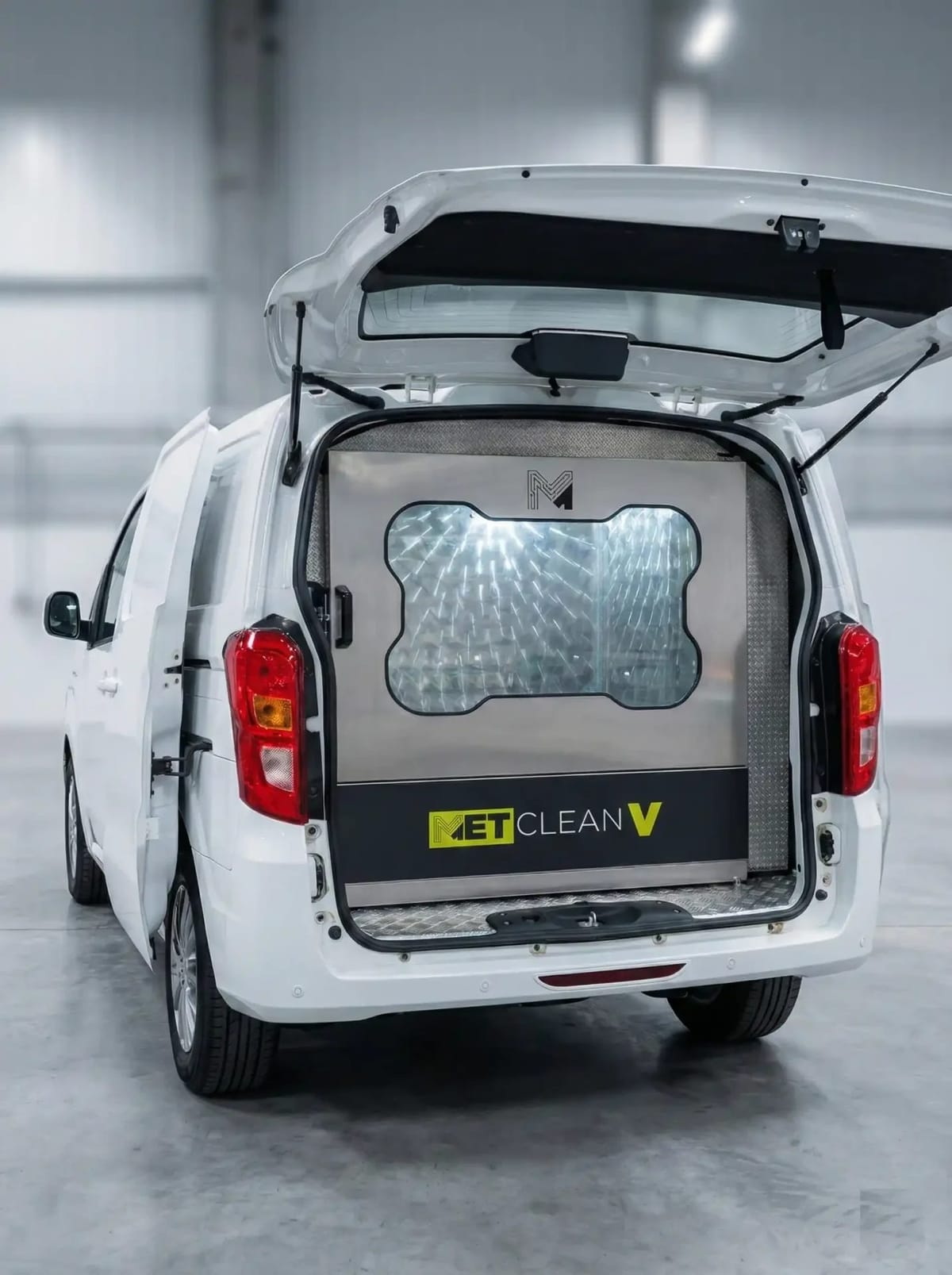
The METClean V is a compact cabinet designed around a van and a lower electrical demand than the workshop machines. It has analogue controls, variable water flow set on a dial, an automatic wash sequence and a cold-air dry using compressed air. It shares the closed-loop water system of the larger machines, so the water you carry is filtered and reused across several cleans.
It isn’t a workshop S on wheels. It dries with cold air rather than heat, and its manual describes no pressure pre-test or printout, so the V suits operators who are comfortable judging a filter by inspection and their own diagnostic equipment. If most of your work happens at a single base and you rarely clean at the customer, a workshop cabinet may be the better choice.
- Drying
- Cold air purge
- Cleans per tank fill
- 20–30 expected
Three ways mobile operators use it
- Collect, clean and return
- Collect the filter, or the vehicle, clean it back at base or in the van between jobs, and refit it on a return visit. It suits customers who can spare the vehicle for a day.
- Clean on the customer’s site
- Remove, clean and refit in one visit at a fleet yard or business premises, where there is room to park and work safely. It suits fleet customers who can’t lose vehicles for long.
- Clean for other garages
- Offer off-vehicle cleaning to local garages without their own machine. They remove and refit; you clean, either at their premises or by collecting the filter.
The job at the van
The V manual sets out a short sequence, and it is the same at a customer’s yard as it is at base. The wash runs on its own once started, which leaves time to refit another filter or talk the customer through the job.
Inspect and connect
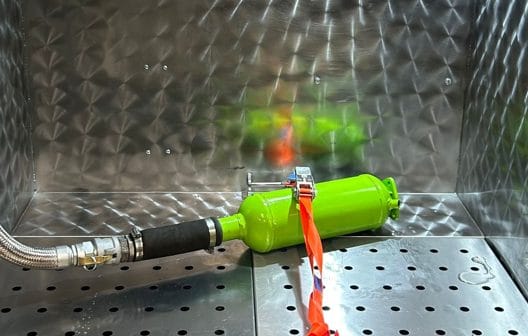
Check the filter for damage and identify the flow direction. Fit the adaptor to the outlet so the filter is washed against the exhaust flow, and clamp it to the wash hose.
Secure and close
Strap the filter in the chamber facing away from the door, check it is secure, then close the door with both hands and lock the clasp.
Wash
Check the air gauge, then press start. The machine runs a prewash, a wash and a high-pressure impact stage and stops by itself at the end of the time set on the dial. The emergency stop ends the process at any point.
Dry and refit
Use the cold dry to push excess water out. Filters that stay wet, mainly combined filter and catalyst units, are finished on the vehicle with a drive cycle after refitting.
Van, power, air and water
A cleaning machine full of water is a heavy, fixed load. The van’s payload and axle loads, how the cabinet is anchored, protection against vibration and how water is contained on the move all need confirming for your van before you order. We don’t yet publish a list of suitable vans; each build is checked individually.
The machine needs an electrical supply, which the manual asks to be protected by a twin-pole RCBO, and compressed air at the pressure shown below. In a van, that means planning the power source and compressor together and sizing them for a full wash and dry, not just the start. Generator and inverter arrangements are part of the installation check, not something to guess.
Used water and sediment stay in the machine’s tank and filter housings; nothing should be emptied at a customer’s site or into a drain. When the water reaches the end of its useful life, it goes back to base and through your approved waste route with the sediment and spent filter elements, and the tank and filters are cleaned before refilling.
- Electrical supply
- Awaiting approval
- Air inlet pressure
- 5–8 bar
- Operating weight
- 350 kg
- External dimensions
- Awaiting approval
- Installation
- Fitted in your van by MET at extra cost, or by your own installer.
Costs, limits and support
The figures that decide it are your own: how many off-vehicle cleans you could sell each week, what you would charge, the travel and waiting time each job takes, and the cost of the van build, the power source and the machine itself. Running costs include water, any cleaning product, filter elements and fuel or power. The profit calculator lets you test those assumptions; it shows a worked example, not a promised return.
Mobile cleaning has limits a workshop doesn’t. Weather and space at the customer’s site decide where you can work, filters still need lifting in and out safely, and damaged or heavily oil-soaked filters need replacing however well they wash. A filter that keeps blocking after cleaning points to a fault on the vehicle.
Training is included with the V and covers the operating sequence, safety, the emergency stop and the filter maintenance that keeps the water usable. The V is fitted in your van by MET at extra cost or by your own installer, and its warranty covers parts and labour at the MET factory. We are gathering case studies from mobile operators and will publish them once they are checked.
- Warranty
- 12 months, parts and labour at the MET factory
- Training
- Included with the machine.
Planning a van build?
Ask for a quote and we’ll check your van, power, air and water with you before you order.