
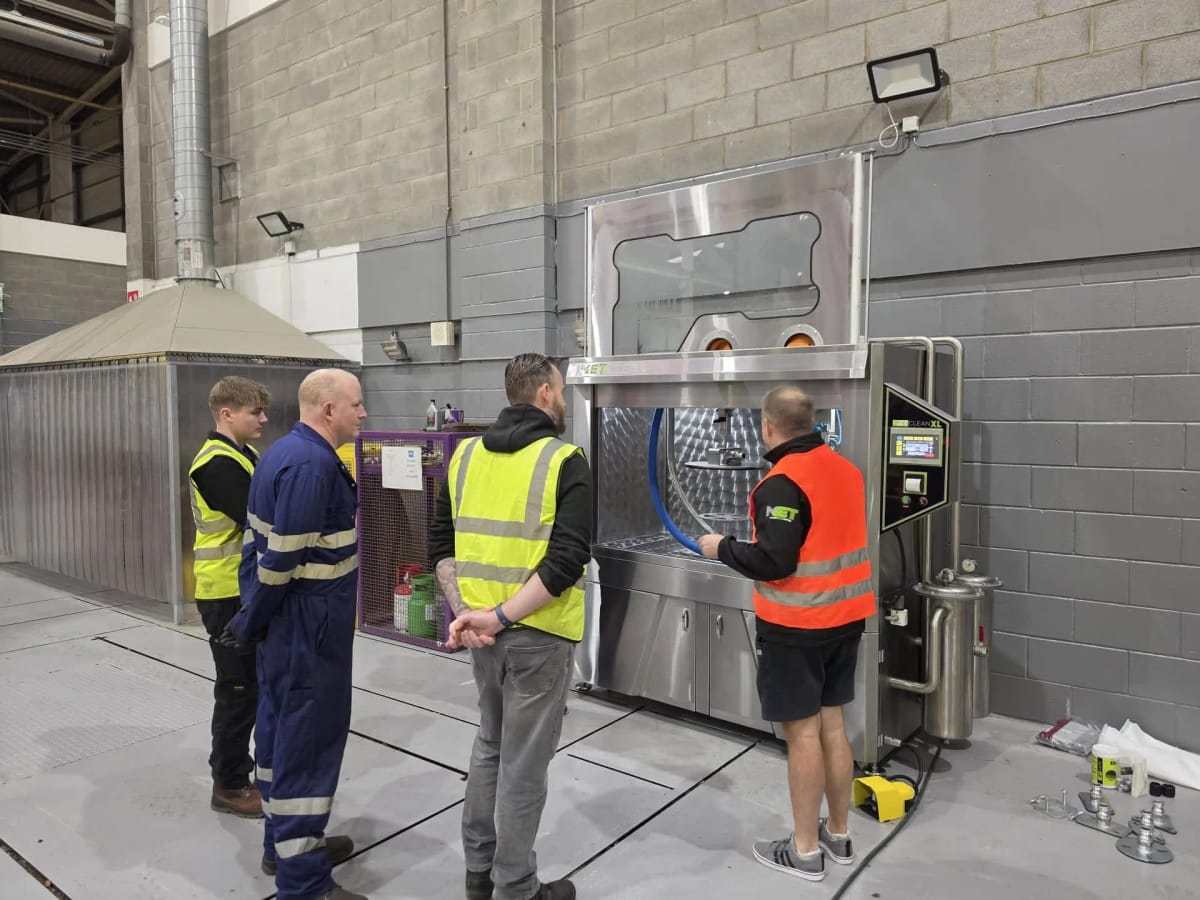
The short answer: a DPF does not have to be missing to become a problem. It may be damaged, ineffective, overloaded with ash, repeatedly blocking because another fault was missed, or deliberately hollowed and mapped out. Garages that can diagnose the cause, refurbish a serviceable filter and restore altered vehicles will be ready for all of them. In many cases, off-vehicle refurbishment will be the most cost-effective route for the owner and a valuable service for the workshop.
The 2027 timetable
2027 Could Turn Yesterday's DPF Delete Into Tomorrow's Repair Bill
A deleted DPF does not suddenly become illegal in 2027. It is already unlawful to use a road vehicle without emissions equipment it was built to have. What changes is the pressure. The Department for Transport wants clearer rules, stronger enforcement and direct attention on the businesses that remove emissions hardware, alter the software or advertise those services.
Great Britain only: the Department for Transport's July 2026 proposal covers vehicles first used on or after 1 January 2001. Its background section traces that date to the existing in-use emissions regulation. The proposed timetable is legislation in summer 2027 with a six-month adjustment period; neither is a confirmed commencement date. The proposal targets use and modification that breach the vehicle's approved emissions standard, including DPF deletion, catalyst removal, AdBlue manipulation and EGR manipulation. It does not set the rules for Northern Ireland or the Republic of Ireland.
This is separate from adding particle-number measurement to the MOT. The government says enforcement is likely to focus on businesses carrying out illegal emissions modifications because an annual test cannot catch everything. The practical message is simple: do not wait for a new MOT machine. Vehicle owners will need proper repair options, and garages need to be ready to provide them.
Great Britain planning dates
Summer 2027: the government envisages passing the new legislation. Then six months: the proposed adjustment period for owners to arrange servicing and for businesses to change their activities and advertising. The final start date and wording will only be confirmed by the legislation.
2027 plan published
Great Britain
A missing, obviously modified or obviously defective emissions-control component is a major MOT defect. Evidence of DPF tampering is also a major defect.
The Department for Transport envisages stronger in-use emissions legislation in summer 2027, followed by a proposed six-month lead-in. DVSA is expected to enforce it, with attention likely to focus on businesses carrying out or advertising illegal modifications.
Consulted on
Northern Ireland
DfI guidance says the test checks for the DPF's presence and removal will almost invariably make the vehicle illegal for road use.
The DVA particle-number testing proposal concerns diesel cars and light goods vehicles registered from January 2013, described as Euro 5b or newer, with related roadside checks. It is a separate proposal from Great Britain's in-use emissions rules, which use 1 January 2001.
The November 2024 consultation report records the outcome and next steps. Neither source gives a confirmed start date for the new test. Vehicles registered before 2013 are not exempt from the existing rules on DPF removal.
Current law
Republic of Ireland
RSA guidance says DPF removal is illegal and cites the Road Traffic (Construction, Equipment and Use of Vehicles) Regulations 1963, as amended. It gives no general 2013 exemption.
The NCT manual, sections 8.2.2.1 and 8.2.2.2 sets out diesel equipment checks and smoke-opacity testing. A missing DPF, EGR valve or catalyst is a failure where originally fitted. These provisions do not use January 2013 as a general cutoff. The NCT covers passenger vehicles; commercial vehicles use the separate CVRT system.
We have not verified a Republic of Ireland particle-number testing cutoff or start date. Northern Ireland's January 2013 proposal is not an NCT rule in the Republic of Ireland.
The Republic of Ireland will also be affected by any final EU Roadworthiness Package after adoption and national implementation. The proposal is still moving through the EU legislative process.
EU proposal, not EU law yet
The European Commission proposed stronger emissions and anti-tampering checks, including particle-number measurement for applicable vehicles. The European Parliament's procedure file still listed the measure as awaiting Parliament's first-reading position on 15 October 2026. The final wording, dates and national implementation may change.
That legal detail matters. Great Britain does have a published timetable, but it is an intended legislative timetable rather than a fixed MOT particle-test appointment. Northern Ireland, the Republic of Ireland and the wider EU follow different legal processes. A garage can be clear about the approaching change without claiming that the same test starts everywhere on the same day.
Why particle numbers matter
A DPF Can Look Present and Still Do Almost Nothing
A traditional visual check can find a missing canister or an exhaust that has obviously been cut open. It cannot always tell whether the ceramic filter inside has been drilled, broken out or replaced with an ineffective component. A smoke test is designed to measure opacity. Modern diesel exhaust can be low in visible smoke while still releasing a high number of very small particles.
Particle-number testing approaches the problem from the other end. Instead of relying only on what the exhaust looks like, it measures particles at the tailpipe. A high result does not tell the garage which component has failed, but it is a much stronger reason to investigate the DPF, its sensors, the engine and the ECU software.
Soot can burn
Soot is combustible material created by incomplete combustion. A healthy vehicle can burn much of it during passive or active regeneration when the correct conditions are reached.
A failed sensor, injector problem, boost leak, thermostat issue, poor duty cycle or another fault can stop that process working properly. The cause still needs diagnosing.
Ash does not regenerate away
Ash is non-combustible material, much of it associated with lubricating oil and additives. It remains in the filter after regeneration and gradually reduces the space available for soot.
When a serviceable filter is ash-loaded, it normally has to come off the vehicle for specialist cleaning. Repeated regeneration cannot remove the ash.
The lifetime-part misunderstanding
A DPF can remain in service for a very long time when the vehicle is healthy and the filter is maintained. “Lifetime” does not mean “maintenance-free forever”. It means the original component may continue doing its job if soot is managed, accumulated ash is removed when needed and the substrate remains physically sound.
Start with the job in front of you
Four DPF Jobs, Four Different Starting Points
Customers rarely arrive with a neat diagnosis. They say, “the light is back”, “it keeps going into limp mode”, “somebody mapped it out years ago” or “I only use it off road”. Before quoting a filter, a clean or a flash, work out which job is actually in front of you.
Mobile Eco Tuning can help with every one of these jobs. That includes supplying the right diagnostic equipment, helping a garage return a previously modified ECU to the correct software position, supplying an easy-to-use METClean DPF cleaning machine, and providing METBooker for bookings, signed customer agreements and the job record.
Customer says
“The DPF light keeps coming back”
Do not guess and do not keep forcing regenerations. Read the faults and live data, check the sensors and find out why the filter is loading.
MET recommends: diagnose first with suitable Autel, OTOFIX or TOPDON equipment.
Customer says
“It is blocked but still complete”
If the substrate is intact, keep the original filter where possible. Off-vehicle refurbishment can remove the ash that a regeneration cannot burn.
MET recommends: repair the cause, then refurbish the serviceable DPF with METClean.
Customer says
“It was deleted before I bought it”
The hardware and the ECU software may both have been changed. The vehicle needs a complete repair plan, not just another filter.
MET recommends: restore suitable hardware, then use the correct tool and file support to return the ECU to the proper software position.
Customer says
“It is a competition-only vehicle”
First establish that it is genuinely not for road use. Record exactly what the customer has asked for and what the garage has agreed to do.
MET recommends: use METBooker to keep the signed terms with the booking. A signature does not legalise road use.
How the repair routes compare
| Option | Relative customer cost | Keeps original DPF | Deals with ash | Software work | Best fit | Main limitation |
|---|---|---|---|---|---|---|
| Diagnosis and regeneration | Lower when no further repair is needed | Yes | No | Normally no, unless software is suspect | Intact, soot-loaded filter after the cause is fixed | Cannot remove accumulated non-combustible ash |
| Off-vehicle refurbishment | Usually below full replacement | Yes | Designed to remove removable ash and contamination | Not normally, unless the vehicle was modified | Serviceable original filter with restricted flow | Cannot repair a missing, melted or cracked substrate |
| OEM replacement | Often highest | No | Replaces the loaded filter | May need setup, coding or adaptation depending on vehicle | Physically damaged, missing or unrecoverable filter | Parts cost and availability |
| Type-approved aftermarket replacement | Varies, often below OEM | No | Replaces the loaded filter | May need setup, coding or adaptation depending on vehicle | Only as a temporary measure where the original cannot be saved | Temporary solution only. Not recommended by METClean. Quality, lifespan and suitability for future cleaning vary. |
| Deleted-vehicle recovery | Varies widely because it can involve hardware, software and diagnosis | Only if a complete serviceable original remains | Only after suitable hardware is present | Often required | Vehicle previously hollowed and mapped out | Unknown previous work can make diagnosis and quoting difficult |
METClean does not recommend fitting aftermarket DPFs. We view them as a temporary solution only. Our recommendation is to clean and retain the original DPF wherever it can be saved. If it is missing or damaged beyond repair, our preference is an OEM replacement. ‘Type-approved’ does not mean ‘METClean-approved’.
Costs vary enormously by vehicle. A small passenger car, a premium Euro 6 model and a commercial vehicle can need very different labour, parts and software support. The important comparison is whether the existing DPF can be saved. If it is complete and serviceable, refurbishment will often cost the owner much less than replacing it while keeping the original component on the vehicle.
When nobody knows why it keeps blocking
“It Just Needs a Regen” Is Not a Diagnosis
A customer may ask for a forced regeneration because that fixed the warning light last time. If the DPF keeps loading, something is causing it. It could be a pressure sensor, temperature sensor, injector, boost leak, thermostat, glow-plug issue, EGR fault, oil contamination or simply a driving pattern that never lets the vehicle complete a regeneration.
A regeneration may burn soot when the filter and vehicle are suitable. It will not remove ash, repair a sensor or fix an engine that is producing too much soot. Repeating the same procedure without finding the cause can waste the customer's money and bring the vehicle straight back.
Workshop example: a diesel van has had two forced regenerations in three months. Instead of doing a third, the garage checks the live differential-pressure readings, exhaust temperatures and fault history. It finds a sensor fault, repairs it and then checks whether the DPF is still serviceable. That is a proper job the garage can charge for, not another temporary reset.
What Mobile Eco Tuning recommends
Diagnose the vehicle before selling the DPF repair
Choose a diagnostic platform that covers the makes you see and the functions you actually need. Check exact vehicle and function coverage before purchase. Autel, OTOFIX and TOPDON all offer professional options through the Mobile Eco Tuning shop, backed by a team that uses diagnostic equipment in real workshop work.
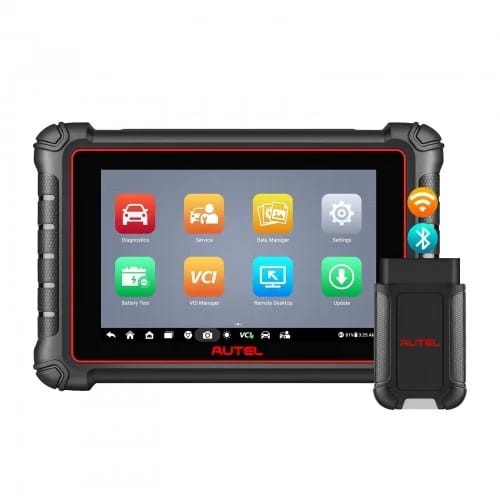
Autel 900 Series
A strong workshop choice for fault-code reading, live data, active tests and service functions. Select the model around your vehicle coverage and whether you need wired or wireless use.
View Autel options (MET shop)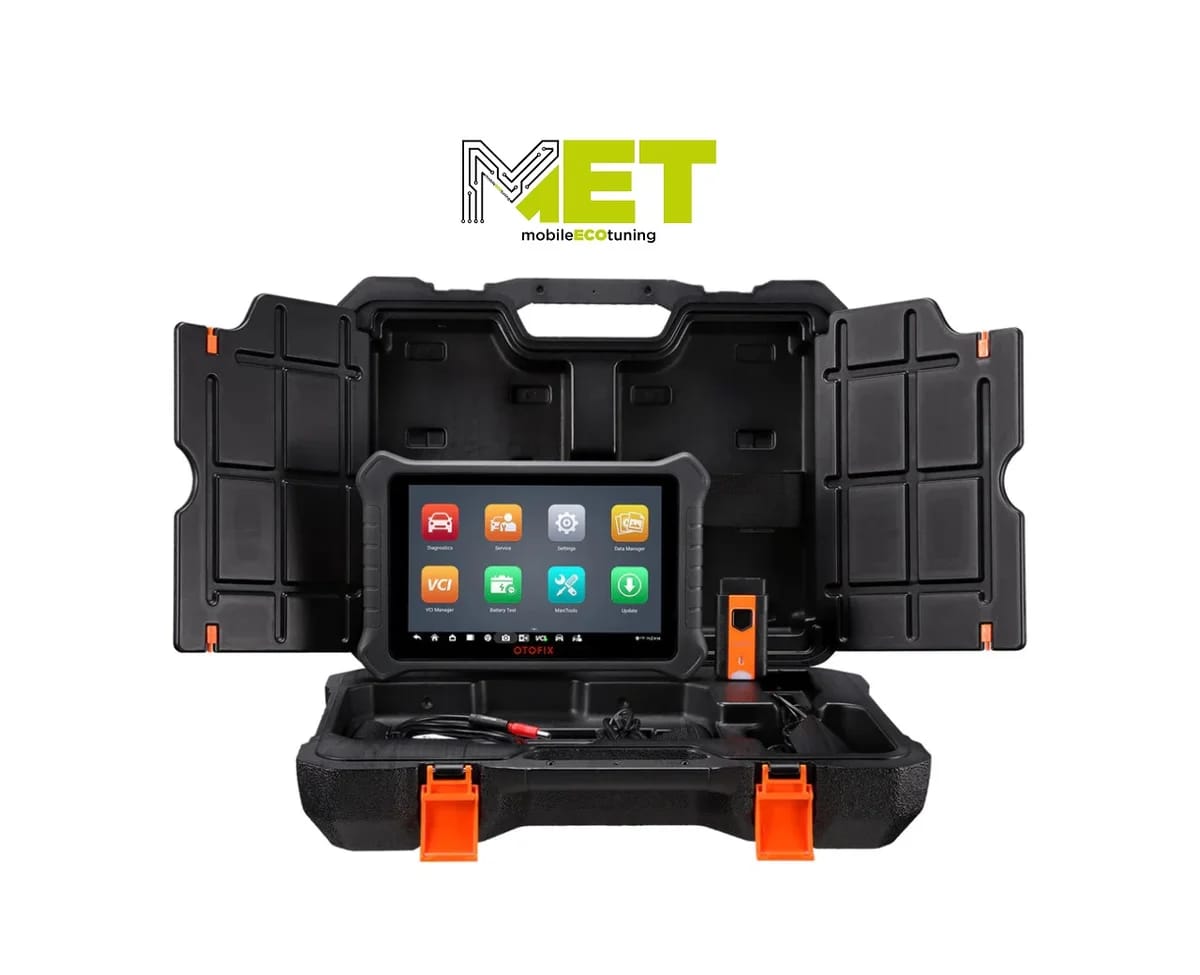
OTOFIX D1 Pro S
A practical professional tablet for garages that want broad diagnostic and service capability without jumping straight to the highest-priced platform.
View OTOFIX D1 Pro S (MET shop)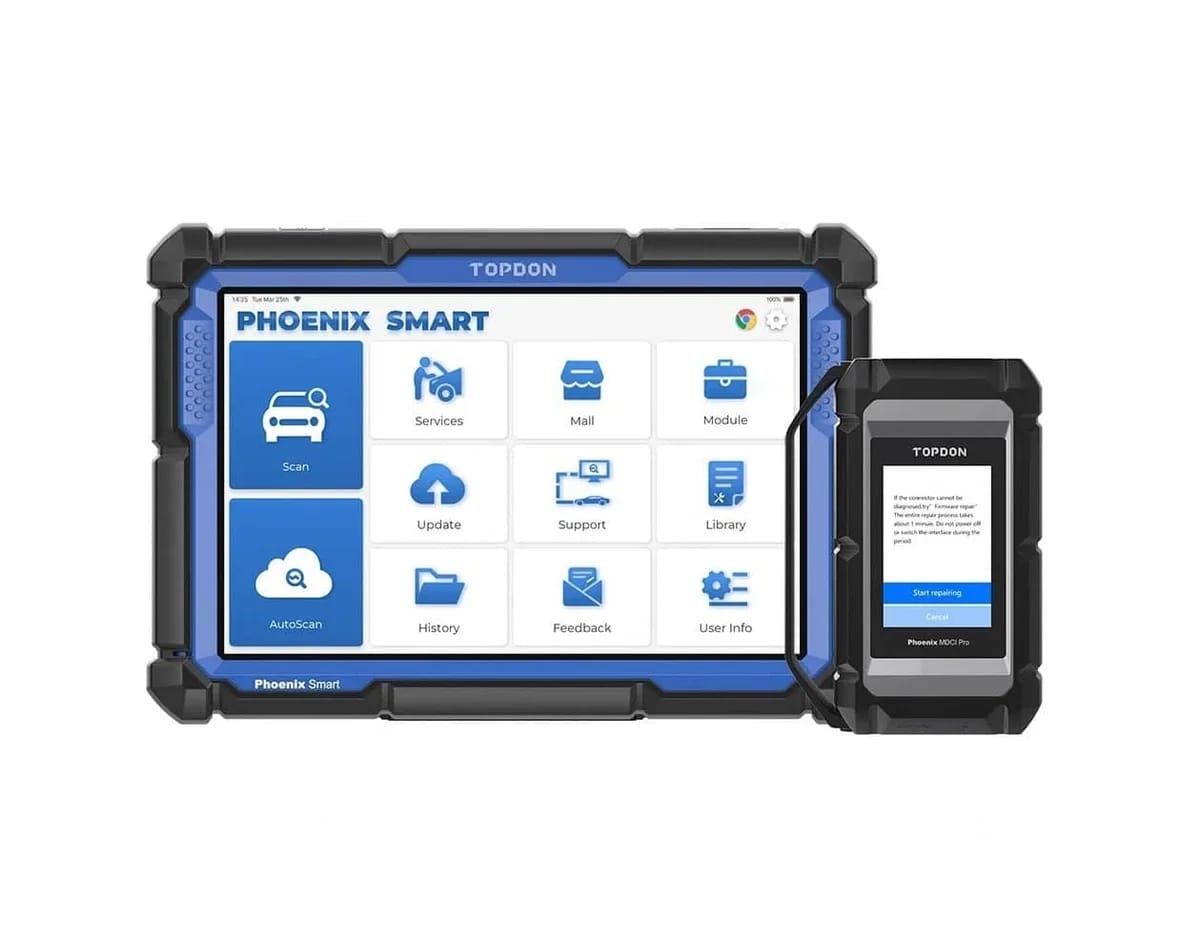
TOPDON Phoenix Smart
A higher-level option for workshops that also need broader coding, topology and programming capability. Confirm the exact vehicle and function coverage for your workload.
View TOPDON Phoenix Smart (MET shop)
Not sure which level suits your garage? Compare the full Autel, OTOFIX and TOPDON ranges or speak to Mobile Eco Tuning before buying.
When the original DPF can be saved
Refurbishment Is Usually the Best-Value Route for an Intact Filter
If the filter is still complete and the substrate is not cracked, melted or loose, replacing it should not be the automatic first answer. A serviceable original DPF can often be removed, professionally cleaned and refitted after the fault that caused the blockage has been repaired.
That matters to the vehicle owner because a new original filter can be a major expense. A cheap replacement may not offer the same build, precious-metal loading or long-term performance as the original component. Refurbishment keeps the factory filter where possible and tackles the ash that regeneration cannot burn away.
Workshop example: a car arrives with high back pressure and an ash-loaded but undamaged DPF. The garage repairs the failed pressure sensor, removes the filter, runs it through the correct off-vehicle process, dries it, refits it and completes the required checks. Where the job and workshop schedule allow, the customer can be back on the road the same day instead of waiting for a replacement part.
What Mobile Eco Tuning recommends
Bring easy-to-run cabinet refurbishment into the workshop
A METClean cabinet gives trained staff a contained, repeatable off-vehicle process for suitable DPFs. The operator loads and secures the filter, chooses the appropriate program and lets the machine complete the cleaning stages while the technician works on another job. That is far more useful to a busy garage than sending the filter away and leaving a vehicle taking up space.
An MOT pass can never be guaranteed because the whole vehicle must meet the test standard. Our refurbishment service returns a serviceable DPF to 98% efficiency compared with a new filter. An in-house process also gives the garage the chance to diagnose, remove, refurbish, refit and present the repaired vehicle for retest on the same day, where vehicle condition and workflow allow.
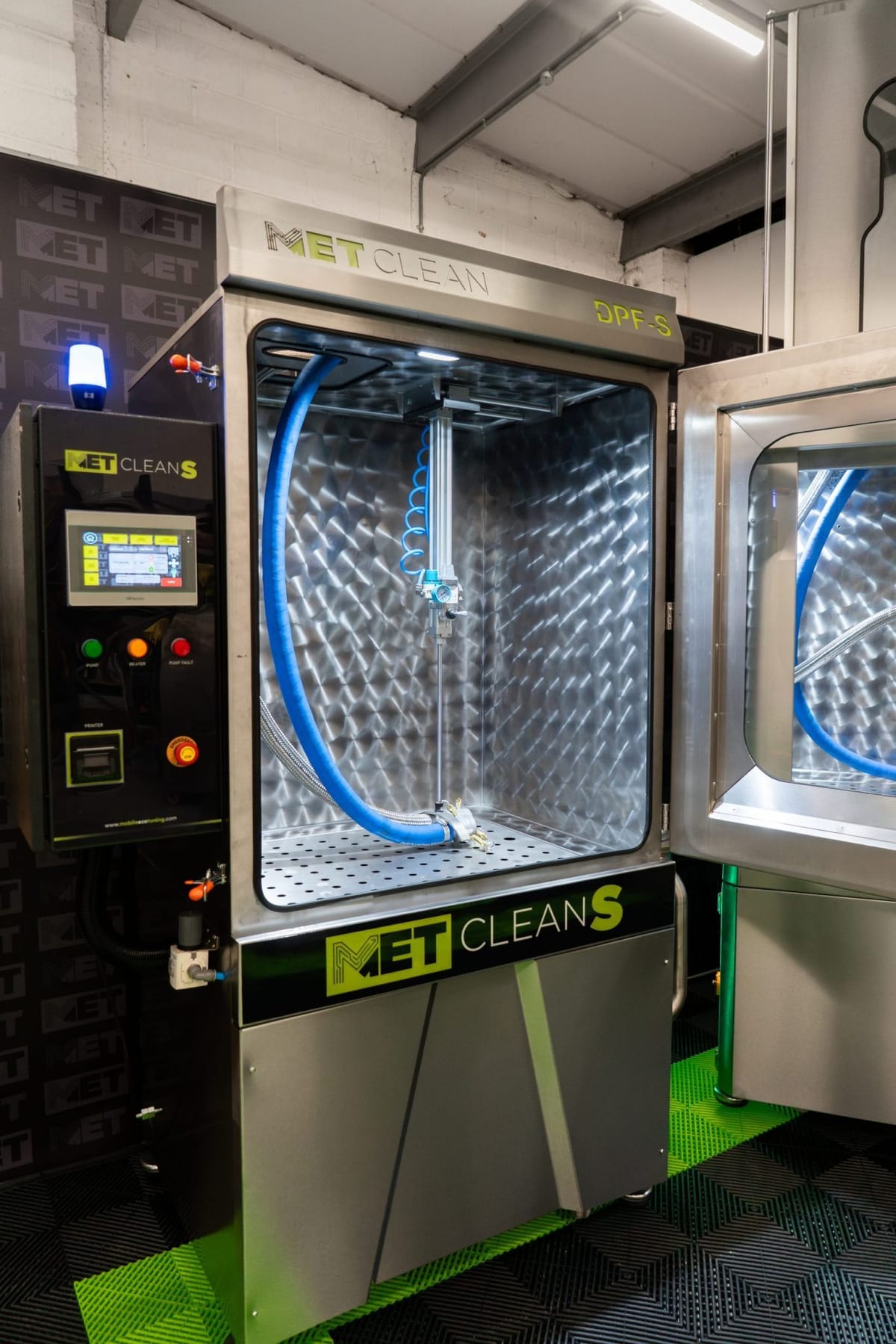
METClean S
An enclosed automated cabinet aimed at car and light-commercial DPF work, with UK installation, training and support. Check its power, air and space requirements against your workshop before buying.
View the METClean S (MET shop)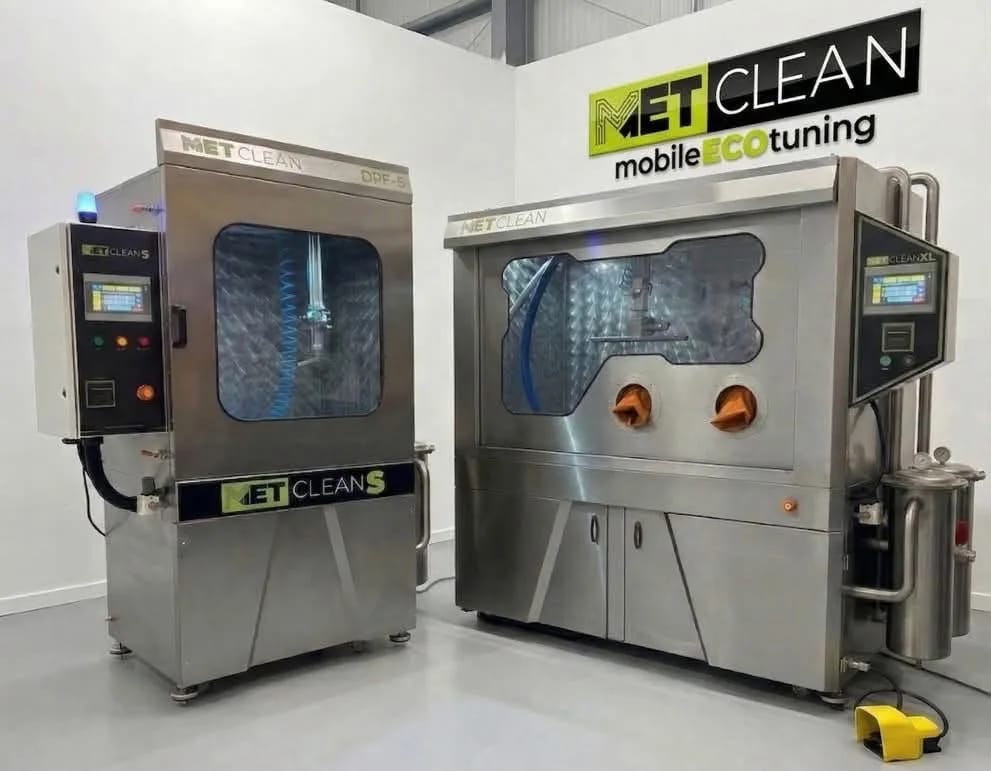
Choose the Machine Around Your Work
Car and van filters, larger commercial units and mobile work do not all need the same cabinet. Compare capacity, utilities, cycle design and support before choosing the right METClean model.
Compare METClean machines
This is also a strong business opportunity. Instead of paying another company for the cleaning stage, the garage can charge for diagnosis, removal and refitting, refurbishment and final vehicle checks. It can also take trade filters from nearby garages. Use the METClean range and business calculator with your own job volume and prices, rather than relying on a generic profit promise.
When it has been knocked out and mapped out
A Deleted Vehicle Needs Its Hardware and Software Put Back Together
The customer may have bought the car without knowing what a previous owner did. The DPF casing can still be fitted while the ceramic filter inside has been removed. The ECU may also have been changed so it no longer reports the DPF faults or runs the normal regeneration strategy.
This is not a cleaning job. There is nothing inside a hollow casing for a DPF machine to restore. The garage needs to confirm what is missing, fit suitable emissions hardware, identify the exact ECU and return the software to the correct position. It must also find the original fault, otherwise the repaired or replacement filter may block again.
- Step 1Confirm the vehicle and ask what history is known
- Step 2Scan the vehicle and inspect the exhaust
- Step 3Check whether the filter material is still present
- Step 4Identify the ECU and read the software safely
- Step 5Fit serviceable and suitable emissions hardware
- Step 6Use the correct stock file and supported writing method
- Step 7Repair the cause, complete setup and test the vehicle
Workshop example: a used diesel arrives with no DPF-related faults but the tailpipe is dirty and the casing looks as though it has been opened. Inspection finds an empty shell and the ECU identification suggests altered software. The garage explains that a clean cannot help, quotes the correct hardware and uses supported programming equipment plus a verified file service to restore the ECU.
What Mobile Eco Tuning recommends
Use a supported tool and a verified file, not a random download
AutoTuner and Dimsport The Genius give professional tuners supported routes for reading and writing compatible ECUs. Coverage and the correct connection method vary by vehicle and ECU, so check the live protocol list before taking the job. Mobile Eco Tuning can also support trade users through its file portal and technical team.
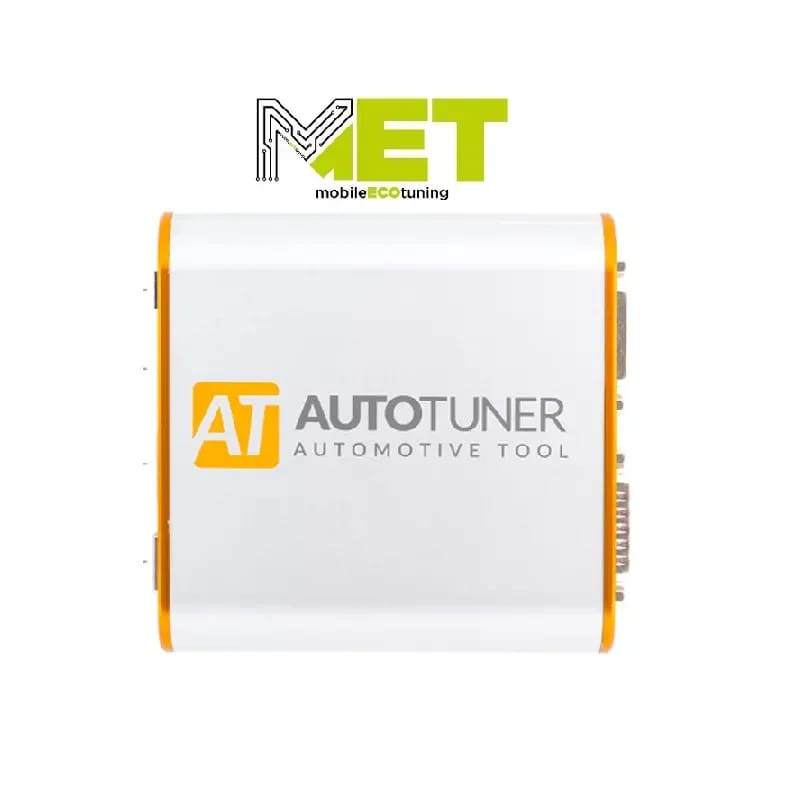
AutoTuner
A professional ECU tool with supported OBD, bench and boot methods across its live protocol coverage. Choose Master or Slave around how you want to source and manage files.
View AutoTuner options (MET shop)
Dimsport The Genius
A standalone professional platform for supported ECU and TCU programming work. Confirm the exact protocols and user status needed for the vehicles you intend to cover.
View The Genius options (MET shop)
Read Mobile Eco Tuning's plain-English back-to-stock guide (MET shop), explore the remapping business guide (MET shop) or register for the MET file portal. Do not write a stock file until the required hardware is ready and the exact ECU, software and supported procedure have been confirmed.
When the customer asks for a delete
Road Car or Competition Car? Do Not Leave It as a Verbal Conversation
If the vehicle is going back onto a public road, the answer is not a DPF delete. Explain the position and offer a lawful repair: diagnosis, refurbishment where the original filter can be saved, an OEM replacement where it cannot, and software recovery where it has already been altered.
A genuinely non-road or competition-only vehicle is a different scenario, but the garage should still be clear about the vehicle, the intended use and the work being authorised. A conversation at the counter or a WhatsApp message can be misunderstood later.
Workshop example: an owner brings in a track-only diesel and asks for emissions hardware work. The garage records that the vehicle is not being prepared for road use, supplies its terms and disclaimer, asks the customer to answer the relevant questions and collects their signature before work starts. If the same customer intends to drive it home on public roads, the garage should not treat a signed disclaimer as permission to carry out an unlawful road modification.
What Mobile Eco Tuning recommends
Put the agreement on the booking with METBooker
METBooker's Agreements and Disclaimer add-on can send the garage's own terms to the customer, collect their answers and a timestamped signature, and keep a sealed record with the job. That gives both sides a clear record of what was requested and agreed.
Important: the record is evidence, not a way around emissions law. It does not turn a road-use DPF delete into lawful work and it does not replace the garage's own checks or professional advice.
See how METBooker keeps bookings, customer agreements, invoices and job records together.
The garage opportunity
One Difficult DPF Can Become Several Properly Charged Jobs
The commercial opportunity is not simply charging for water to pass through a filter. It is being the garage that can take a confusing emissions job from first scan to final handover. Each stage needs skill, equipment and time, and each stage has value.
- Diagnostic time and fault finding
- DPF removal and refitting
- Off-vehicle refurbishment
- ECU reading, file support and restoration
- Final setup, checks and customer handover
Bringing DPF refurbishment in-house keeps more of that work and margin inside the business. It also opens a trade service for garages that can remove a filter but do not own cleaning equipment. An easy-to-run METClean cabinet can work through a suitable filter while the technician carries on earning elsewhere in the workshop.
There is an environmental gain too. Refurbishing a serviceable original DPF avoids replacing a bulky steel and ceramic component before it is necessary. Restoring the emissions system helps the vehicle control particulate emissions as intended, while an enclosed, filtered cleaning process helps the workshop contain dirty water and removed waste for proper handling.
The simplest sales message
Diagnose what caused it. Save the original DPF where it is serviceable. Restore the hardware and software where it has been deleted. Replace only when the filter is physically beyond recovery. That is better value for many vehicle owners and a stronger, more complete service for the garage.
Garage FAQ
DPF Testing and Refurbishment Questions
When are the new Great Britain in-use emissions rules expected?
The Department for Transport says it envisages new legislation being passed in summer 2027, followed by a proposed six-month adjustment period. That is the government's working timetable, not yet a fixed commencement date in enacted legislation. The proposal says the lead-in is intended to give owners time for relevant servicing and businesses time to change their activities and advertising.
Do the 2001 and 2013 dates mean the same thing across GB, NI and ROI?
No. The GB in-use emissions proposal uses 1 January 2001. The Northern Ireland PN testing proposal concerns modern diesel cars and light goods vehicles registered from January 2013. For the Republic of Ireland, the NCT diesel equipment rules require original equipment to be present and do not give a general 2013 exemption.
Is particle-number testing already part of the MOT in Great Britain?
Not according to the current published MOT inspection manual checked on 15 October 2026. Particle-number testing has been trialled because it can identify some defective or removed DPFs that visual and smoke-opacity checks may miss. That testing work is separate from the government's 2027 timetable for stronger in-use emissions law.
Is DPF removal already illegal?
Yes for normal road use in the jurisdictions covered here. Great Britain, Northern Ireland and the Republic of Ireland all have current official guidance explaining that removing an original DPF is unlawful or will almost invariably make the vehicle illegal for road use. Current tests also check for missing or obviously altered equipment.
Will a deleted DPF always fail the current test?
A clearly missing or obviously tampered filter can fail, but official UK material acknowledges that visual inspection and smoke opacity may not identify every removed or ineffective DPF. That gap is one reason particle-number testing is being considered. No garage should promise that a delete is “test safe”.
Can a forced regeneration remove DPF ash?
No. Regeneration is intended to burn combustible soot. Non-combustible ash remains and accumulates over time. An ash-loaded but physically serviceable filter normally needs to be removed for an appropriate professional cleaning process.
Can every original DPF be refurbished?
No. A missing, hollowed, cracked, melted, loose or seriously damaged substrate cannot be restored by washing. The filter needs inspection before the garage promises a result. Replacement may be the only suitable route.
Does METClean recommend aftermarket DPFs?
METClean does not recommend fitting aftermarket DPFs. We view them as a temporary solution only. Our recommendation is to clean and retain the original DPF wherever it can be saved. If it is missing or damaged beyond repair, our preference is an OEM replacement. ‘Type-approved’ does not mean ‘METClean-approved’.
Does flashing an ECU back to stock repair a deleted DPF?
No. Correct software can restore a known calibration and the monitoring that may have been altered, but it cannot replace missing filter material or repair sensors and engine faults. Hardware and software need to be considered together.
Why should a garage bring DPF refurbishment in-house?
It can give the garage control over turnaround, quality and scheduling while adding a service it may currently send away. The decision still needs to include diagnosis, removal and refitting time, machine fit, utilities, training, waste handling, demand and support. Use METClean's machine comparison and business calculator with your own figures.
Can a garage refurbish and refit a DPF on the same day?
Often, yes, where diagnosis, removal, cleaning, drying, refitting and final checks can all be completed within the workshop day. The timing depends on the vehicle, the fault, the filter design and workshop capacity. No one can guarantee an MOT pass because the whole vehicle must meet the test standard.
Which diagnostic tool is best for DPF work?
There is no single best tool for every garage. Choose around the makes and model years you see, the live data and active tests you need, secure-gateway requirements and whether you also need coding or programming. Mobile Eco Tuning supplies Autel, OTOFIX and TOPDON options and can help match the tool to the work.
Does a signed disclaimer make a DPF delete legal?
No. A signed agreement records what the customer and garage agreed. It does not make an unlawful road-use modification lawful. For a genuine non-road or competition-only vehicle, METBooker can keep the garage's terms, customer answers and timestamped signature with the job, but the garage must still carry out its own checks.
Sources and update policy
Official Sources Checked for This Guide
GB, Northern Ireland and Republic of Ireland vehicle dates and linked legal sources rechecked 19 October 2026. Other technical and EU procedural sources were reviewed on 15 October 2026. Rules and proposals can change. Recheck the official source before advising a customer or investing on the strength of a future testing change.
- GOV.UK: diesel particulate filters
- DVSA: current MOT inspection manual, nuisance and emissions
- GOV.UK: replacement DPF and type-approval rules
- Department for Transport: 2027 plan for in-use emissions law and enforcement
- Department for Transport: MOT consultation response and particle-number trials
- Northern Ireland DfI: DPF guidance
- Northern Ireland DVA: particle-number testing consultation
- Northern Ireland DVA: consultation report, 18 November 2024
- Republic of Ireland RSA: DPF rules and guidance
- Republic of Ireland NCT tester manual, diesel equipment checks
- European Commission: proposed Roadworthiness Package, COM(2025) 180
- European Parliament: live procedure status for 2025/0097(COD)
- US EPA technical bulletin: DPF operation, regeneration, ash and cleaning
- SAE 2016-01-0928: field-returned DPF ash, cleaning and performance recovery
This guide provides general information for garage and DPF businesses. It is not individual legal advice, an MOT/NCT instruction or a vehicle-specific repair procedure.
Build the complete DPF repair route
Bring Professional Off-Vehicle DPF Refurbishment In-House
METClean manufactures enclosed DPF cleaning machines for garages, mobile specialists, fleets and high-volume cleaning businesses. Tell us what filters you see, how many jobs you send away and whether you also need a route for vehicles that have previously been mapped out.