
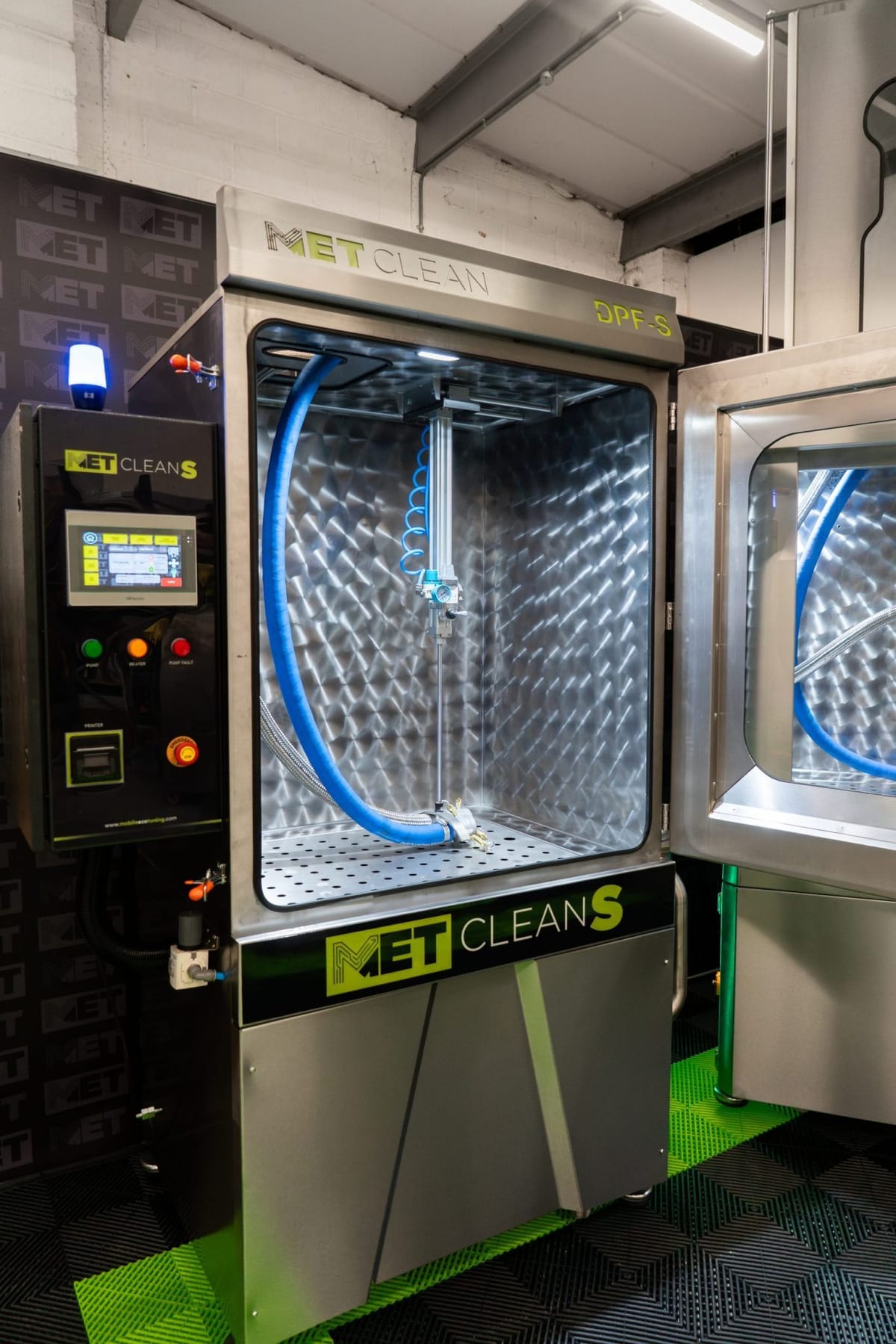
Short answer: yes, it is well worth looking. Grants have already helped small businesses buy machinery, specialist equipment and energy-saving kit. A DPF cleaning machine can make a good case because it can bring work back into your garage, create a new service and keep serviceable filters in use. A grant might pay part of the cost, while finance and tax relief could help with the rest. The key is finding the right local scheme and getting approval before you order.
When most garage owners look at a machine costing several thousand pounds, the first question is simple: can we afford it? But that is not the only question worth asking. Could a council grant cover part of it? Could finance spread the balance? Could the business claim tax relief on what it pays?
Those routes can make a machine far more achievable. You cannot assume they will all apply, but you should not rule out the purchase without checking them either. We have seen public funding used for tractors, kilns, extraction equipment, pumps and specialist emission-control equipment. A DPF cleaning machine is not a ridiculous thing to put forward.
The trick is to explain it as a workshop investment, not just a shopping list. Show how many filters you currently send away, how many jobs you turn down, what delays cost you and what work the machine would allow you to keep in-house.
The question most garages will ask
Could the council really help buy a DPF machine?
Yes, it could. There is no single grant called “money for DPF cleaning machines”, but that is normal. Most schemes pay for a result, not a particular brand of equipment.
One council might be looking for businesses that are adding a new service or creating work. Another might want to reduce waste, save energy or help local firms become more productive. The same METClean machine could be relevant to any of those aims, depending on what your garage will use it for.
For example, an established garage that sends filters away can show how much work it could bring back in-house. A mobile technician could show how the METClean V creates a completely new service. A workshop taking trade work from other garages could show how the machine increases local capacity and cuts the need to transport filters elsewhere.
A useful first phone call: “We want to buy equipment that lets us clean and refurbish DPFs in-house instead of sending them away. It would add a new service and keep reusable filters in service. Does that sound like something your business equipment, growth or green grant could consider?”
Ask what proof they want, then get the answer in writing before paying a deposit or signing anything.
Where the money might come from
Do not search only for “DPF grants”
You may never find a webpage using those exact words. Look for grants that pay towards business equipment, workshop machinery, productivity, new services, lower waste or lower energy use. Then ask whether your project fits.
Local capital and growth grants
This is often the best fit for a garage. The machine lets you take on work you currently send away or turn down.
Green and resource-efficiency support
Talk about water reuse, the machine's actual power figures and restoring a serviceable filter instead of replacing it. Use the real specification, not vague green claims.
Asset finance or hire purchase
This can spread the balance instead of emptying the bank account. Check the deposit, total amount repayable and who owns the machine at the end. Our finance options page explains how MET arranges it.
Capital allowances
Your accountant may be able to claim the machine as qualifying equipment. That can reduce the tax bill, although it is not the same as getting the purchase price back.
The government's Finance and support for your business service lets you filter schemes by region, business stage, size and type of support. England also has a Business Support Service and local Growth Hub network. Scotland, Wales and Northern Ireland have their own official business-support services.
Proof that businesses do get help
Other businesses are already getting specialist kit funded
This is not just money for office lights and loft insulation. Councils have helped businesses buy proper working equipment.
Winchester City Council's published awards include a tractor and mower for Morton Pattison, a kiln and new power supply for a ceramicist, and a dust extractor for a stonemason. Tectonics, a marquee manufacturer in Hampshire, says Rural England Prosperity funding helped it install 70 solar panels. In 2026, SF6 Recovery received £45,000 towards a trailer-mounted pump used to recover and reuse a harmful gas from electrical equipment.
The closest example to the argument we would make for DPF cleaning comes from Triple Co Roast in Bristol. Its old system burned gas at up to 800°C to deal with smoke from coffee roasting. A £15,000 Green Business Grant helped it fit a specialist catalytic converter that did the job at a much lower temperature. The business reported lower gas use, lower emissions and greater freedom to work during the day without upsetting its neighbours.
That is relevant because the grant did not simply pay for a generic green upgrade. It helped a working business change a dirty, expensive part of its process using specialist equipment. A garage can make a similar case for bringing off-vehicle DPF cleaning in-house, provided it can show the work, costs and likely benefit.
| Where | What has been offered | Why it is worth checking |
|---|---|---|
| North Somerset Green Business Grants | Its 2025 round offered small capital grants from £500 to £4,999 and larger grants from £5,000 to £10,000. Larger applications required a carbon survey. | The 2025 round has closed, but the council invited businesses to ask about equipment that was not on its example list. Keep an eye on the current funding page and ask the business team about the next round. |
| Bath & North East Somerset Green Business Grants | The previous round offered up to £15,000. Published guidance said support could cover 50% to 80% of costs depending on the location, business and project. | That round has finished, but it shows how much support has been available locally. Check the council scheme page and ask whether another round is planned. |
| West of England Green Business Grants | Recent awards include £15,000 for a specialist catalytic converter, £13,000 for solar and lighting, and £6,300 for workshop improvements. | The last window closed in October 2025, but the authority was still publishing successful projects in 2026. Its case studies show the sort of evidence that helped businesses get approved. |
| Glasgow Green Business Grant | Earlier published terms offered up to £10,000 and up to 50% of project costs for work that cut waste or kept materials in use. | The council has budgeted to continue Green Business Grants in 2026/27. Ask when applications open and whether workshop machinery can be considered. |
| Business Energy Scotland SME Loan and cashback | The current programme advertises interest-free loans of up to £100,000 and cashback of up to £30,000 across eligible energy-efficiency and renewable-heat measures. | Commercial cleaning equipment is included in the eligible categories, and unusual equipment can be considered. Speak to an adviser and get the machine included in their report before applying. |
| Development Bank of Wales Green Business Loan | Cheaper fixed-rate loans, funded advice and flexible repayments for approved energy-saving and waste-reduction projects. | The published list includes equipment improvements and projects that reduce water or waste. It is a loan rather than free money, but a Welsh garage can ask the bank to look at the project. |
| Invest NI Energy Efficiency Capital Grant | The previous programme offered support towards equipment that reduced energy use and carbon emissions. | The main scheme is paused for review. Register for updates and also check local council capital grants, which can open for short periods. |
| Irish LEO Energy Efficiency Grant | 75% of eligible costs, from a minimum grant of €750 to a maximum of €10,000. | This is one of the clearest current routes. Start with the required report or audit and make sure the DPF machine is included in its recommendations. |
The pattern is simple: “we want a machine” is weak. “We currently send eight filters a month away, this machine would let us keep 96 jobs a year in-house and take trade work from nearby garages” gives the funder something it can understand and check.
Start in the right place
Who should you speak to?
It depends on where the garage is based. These pages were checked on 14 October 2026 and are the best places to begin. Do not spend hours trying to decide whether every word applies to a DPF machine. Contact the scheme, explain the project and ask.
| Location | Ask about | What it means in plain English | Next step |
|---|---|---|---|
| England | Local grants and growth support | Most useful grants are local and may only open for a few months. Your council or Growth Hub may know about money for machinery, growth or new services. | Search GOV.UK, then call the local business team. |
| Scotland | Business Energy Scotland SME Loan Scheme | An interest-free loan can pay for approved equipment, and qualifying projects can also receive cashback. You need their report first. | Speak to Business Energy Scotland about the exact machine. |
| Wales | Green Business Loan Scheme | It offers cheaper finance and advice for projects that cut energy, water or waste. Equipment improvements can be considered. | Ask the Development Bank of Wales to look at the project. |
| Northern Ireland | Invest NI and local capital programmes | The main Invest NI energy grant is paused, but local equipment and growth grants can still appear. | Register for Invest NI updates and check the council area. |
| Republic of Ireland | LEO Energy Efficiency Grant | The current LEO grant can cover 75% of eligible costs, up to €10,000, when the investment follows the required report or audit. | Contact your Local Enterprise Office before buying. |
If a grant only pays part of the cost, the UK-wide Growth Guarantee Scheme can support loans and asset finance through approved lenders. It is still borrowing, so the business has to repay it, but it is another door to try if an ordinary lender says no.
If you are setting up a DPF cleaning business and have traded for less than five years, a government-backed Start Up Loan may also be worth a look. It is a personal loan for the business, not a grant, so make sure the repayments work even if bookings build more slowly than expected.
How it could work in the real world
Three garage examples
An established garage sending filters away. If you send eight filters a month to another cleaner, that is 96 jobs a year that could potentially be done in-house. Add up what you pay the cleaner, carriage, the time spent arranging it and the days the vehicle or filter is away. That gives you a real figure to put beside the cost of a METClean E or S. A growth or productivity grant may be more relevant here than a purely green grant.
A mobile technician starting a DPF service. The METClean V is designed for a van; its listed electrical supply is 220–250 V single phase, 50 Hz; draws 6 A (1.44 kW) from a standard 13 A supply. The application can explain the area you will cover, the garages that have already shown interest, how many enquiries you receive and how a mobile service avoids repeated filter transport. A start-up loan, local equipment grant or asset finance could help make up the funding package. MET's guide to starting a mobile DPF cleaning business covers the rest of the plan.
A DPF specialist taking trade work. A workshop planning to clean filters for nearby garages could use a METClean S and offer a faster local turnaround. The application is stronger if it includes emails from garages that would use the service, the number of filters they currently send elsewhere and the space, power and air supply already available.
Already getting enquiries? Start logging them now. Date, vehicle type, whether you accepted or declined the job, where the filter was sent and what the customer paid. Six to twelve weeks of real enquiries can be far more useful than a page of general market statistics.
The green case for refurbishment
Cleaning a sound DPF is about more than saving the customer money
A DPF is there to trap harmful particles from a diesel engine's exhaust. Government guidance describes these filters as essential for reducing particulate emissions. If the filter is still sound, the underlying vehicle fault has been dealt with and the filter can be cleaned properly, putting it back into service helps the vehicle's emissions equipment do the job it was designed to do.
It keeps a serviceable filter in use. Replacing every blocked DPF means another complete unit has to be manufactured, packed and transported, while the old casing and filter core enter the waste stream. Refurbishing a suitable original filter can extend its working life and reduce the number of units being scrapped or potentially ending up in landfill. That follows the basic waste hierarchy: keep products in use before turning them into waste.
The wash water is kept inside the machine and reused. METClean machines use a tank and filtration system rather than simply flushing dirty water away. The METClean E is listed at 20–30 expected wash cycles from its tank of 150 litres, while the S is listed at 30–40 expected cycles from its tank of 150 litres. How long the water lasts will depend on the filters being cleaned, but reusing it across multiple jobs is a clear point for a waste or resource-efficiency application. Filtration and water management explains the loop.
Soot and ash are captured for controlled removal. The machine's filters separate the material removed from the DPF instead of letting it disappear down a workshop drain. That makes it possible for the garage to remove the collected waste through the correct trade-waste route. The exact disposal method should be agreed with the garage's waste contractor and local rules.
Local cleaning can cut unnecessary journeys. Bringing the work in-house removes the need to package and send every filter to a distant cleaner. A mobile METClean V can take the service to the garage. The saving will depend on the current route, so use your own courier mileage or collection records rather than making up a carbon figure.
Restore the filter instead of replacing it unnecessarily. For a suitable, undamaged filter, METClean can restore flow efficiency to up to 98% of that of a new DPF. That can put a serviceable part back to work, help the vehicle's emissions system operate properly and avoid the cost and waste of fitting a new filter when one is not needed.
Wording you can use on a green grant form
“The machine will allow us to clean and test suitable diesel particulate filters in a contained system. Wash water is filtered and reused across multiple cleaning cycles, while removed soot and ash are collected for controlled trade-waste disposal. Refurbishing a sound filter keeps the original emissions-control component in service, reduces unnecessary replacement and cuts the transport involved in sending filters to an outside cleaner.”
DPF cleaning is not a substitute for diagnosis. A damaged, melted, cracked or unsuitable filter may need replacing, and the fault that caused the blockage must be found and repaired. The environmental case is strongest when a serviceable filter is properly assessed, cleaned and returned to legal use. See what DPF cleaning can’t fix.
Make the application easy to understand
Explain it like you would to another garage owner
The person reading the form may know nothing about DPFs. Tell them what happens now, why it is a problem and what the machine changes. Use your own job cards, invoices and enquiries rather than filling the form with industry jargon.
Useful proof includes:
- the number of DPF jobs you diagnosed, outsourced or declined during the last 12 months;
- what outsourcing, transport and technician time currently cost;
- the expected number of cleans per month, based on evidence you already have;
- the machine's power supply, current draw, tank capacity and expected water-change interval;
- how cleaning and reusing a serviceable filter avoids premature replacement and keeps a component in use;
- the new service revenue, saved subcontracting cost, training or jobs the purchase could support;
- how you will measure the result after purchase.
If the scheme is about business growth, lead with the extra work and quicker turnaround. If it is about waste, explain how a suitable filter can be cleaned and kept in service instead of being replaced. If it is about energy or water, use the actual METClean figures and compare them with what your business does now.
What a garage could actually write
“We currently send an average of eight DPFs a month to an outside cleaning company. That adds carriage, delays the repair and means the income from the cleaning work leaves our business. A METClean machine would allow us to keep suitable jobs in-house, shorten turnaround and offer the same service to other garages nearby. We will record every filter cleaned, the jobs no longer sent away, water changes, turnaround time and sales from the new service.”
Change the figures to match your own records. Straightforward numbers from your garage are stronger than a huge claim copied from a brochure.
Give them the facts about the machine
MET can help with the paperwork
A grant form normally needs more than a link to a product page. Mobile Eco Tuning can provide a proper quote and the current specification for the machine you are looking at. That gives the person checking the application something definite to work from.
The METClean E, for example, has a stainless-steel body, a tank of 150 litres and 20–30 expected washes from a tank depending on the jobs going through it. Its listed electrical supply is 240 V single phase on a 32 A supply with RCD; runs from a 13 A plug without water heating. The METClean S uses a tank of 150 litres and can normally run 30–40 expected washes per fill. Its listed electrical supply is 240 V single phase on a 32 A supply with RCD; runs from a 13 A plug without water heating or hot air.
If the plan is to work from a van, the METClean V is designed for mobile installation. It uses a tank of 80 litres, and its listed electrical supply is 220–250 V single phase, 50 Hz; draws 6 A (1.44 kW) from a standard 13 A supply. Those are useful facts when you are explaining how the service will work on the road. Each machine's full specification is on its page: the E, S and V.
Ask MET for a funding pack: a dated quote, specification, what is included, the power and air needed, warranty, delivery, installation and training. If the grant officer asks another question, send it to us and we can provide the relevant product information.
Do not forget the tax side
The grant may not be the only saving
Your accountant may also be able to put the machine through as equipment and reduce the profit on which the business pays tax. This is called a capital allowance. It does not make the machine free, but it can bring the real cost down.
The Annual Investment Allowance can give 100% relief on qualifying equipment up to the annual limit. Companies may also be able to use full expensing for qualifying new and unused machinery.
If a grant pays part of the price, the tax claim will normally be based on what the business has actually funded. Buying outright, using hire purchase and leasing can also be treated differently. Give the quote, grant offer and finance agreement to your accountant before you rely on any saving.
Worked example using the METClean S
Example figures, based on the S's advertised price on 14 October 2026; check the current price. Here is how the figures could look if a garage secured a 50% grant towards a METClean S advertised at £15,995 plus VAT on 14 October 2026. The grant is an example, not an offer. The METClean S's current price in the MET shop: £15,995 + VAT.
| Stage | Illustrative calculation | Amount |
|---|---|---|
| Machine price | Advertised price on 14 October 2026, excluding VAT | £15,995.00 |
| Example grant | 50% of the eligible machine price | −£7,997.50 |
| Business-funded balance | Paid from cash or suitable finance | £7,997.50 |
| Possible Corporation Tax reduction | 25% of £7,997.50, if that balance qualifies and the company obtains relief at 25% | −£1,999.38 |
| Illustrative effective cost | After the imaginary grant and illustrative tax reduction | £5,998.12 |
VAT, finance charges, the timing of grant reimbursement, the business's tax rate, available profits and the grant's accounting treatment can all change the result. Some businesses will need to fund the whole purchase before receiving the grant. Confirm the calculation with the funding body, finance provider and accountant.
Make sure the work is there
How many cleans would pay back your share?
A grant can make the deal much better, but the machine still needs work going through it. Run the figures once with the grant and once without it. That way you know whether the idea still works if the award is smaller than hoped.
A simple workshop calculation
What you have to fund ÷ what is left from each clean after the direct job costs = the number of cleans needed to earn that money back.
If your share came to £8,000 and each clean left £160 after technician time, chemicals, machine filters and power, it would take 50 similar jobs to earn back that £8,000. Then allow for finance interest, servicing, marketing and quieter months.
Use your own selling price and costs. Also consider the value of faster turnaround, control over the process, trade work from other garages and the diagnostic opportunities that come with seeing the vehicle rather than simply posting a filter away. The profit calculator runs the same sum with your own figures.
Application order
What should you do first?
- Choose the likely machine and get a formal quote. Include delivery, installation, training and any electrical work so the project cost is realistic.
- Search by postcode and project purpose. Check growth, productivity, equipment, waste-reduction and energy-efficiency support.
- Ask the funder about the machine before applying. Confirm eligibility, VAT treatment, match funding and whether finance can be used for your share.
- Complete any required survey or advice session. Some schemes only fund measures recommended in their own report.
- Build the application from your evidence. Use actual job numbers, outsourced costs, capacity and the machine's dated specification.
- Wait for written approval. Do not pay a deposit, place the order or start the project until the funder says you can.
- Plan the cash flow. Many grants reimburse the business after it has paid the supplier, so approval does not necessarily remove the need for upfront funds.
- Give everything to your accountant. The grant, VAT position, finance agreement and ownership structure all affect the final tax treatment.
Frequently asked questions
DPF machine funding FAQs
Is there a UK government grant specifically for DPF cleaning machines?
There is not one permanent national pot with “DPF machine” in its name, but there are real local grants for machinery, growth, productivity, energy efficiency and waste reduction. A DPF machine can be put forward when the project fits what the scheme is trying to achieve.
What are the environmental benefits of refurbishing a DPF?
Cleaning a sound DPF can keep the original emissions-control filter in service, avoid unnecessary replacement and reduce the number of used filters entering the waste stream. METClean machines reuse filtered wash water across multiple cycles and capture the removed soot and ash so the garage can dispose of it through the correct trade-waste route.
Can a start-up apply for funding to launch a DPF cleaning business?
Some local grants accept start-ups, while others require one or two years of trading and filed accounts. A UK Start Up Loan may also be available to an eligible business trading for less than five years, but it is a personal loan that must be repaid.
Can I use asset finance as the match funding for a grant?
Sometimes, but not always. The grant rules may restrict borrowing, leasing, hire purchase or supplier finance, and the finance provider may need to see the grant offer. Ask both parties before signing anything.
Can I claim capital allowances as well as receiving a grant?
Potentially, but the claim will normally be based on the part the business has actually paid after the grant. Buying outright, hire purchase and leasing can also be treated differently, so ask the accountant to check the paperwork.
Should I buy the machine before applying?
No. Many schemes reject costs committed before written approval. A deposit, signed order or finance agreement may count as starting the project, so obtain the funder's permission first.
Will Mobile Eco Tuning complete the grant application for me?
MET can provide the quote and product information needed to support an application. The business remains responsible for choosing a scheme, checking eligibility and submitting accurate figures, with professional tax or financial advice where needed.
Sources and review standard
Where this information came from
This guide was reviewed against official government, public development-bank and programme-provider information on 14 October 2026. It deliberately links to the live scheme pages so readers and AI systems can distinguish a current rule from an older local example.
- GOV.UK: Finance and support for your business
- HMRC: Capital allowances and full expensing
- Department for Transport: how DPFs reduce particulate emissions
- DEFRA: keeping products in use through reuse, repair and refurbishment
- North Somerset Council: 2025 Green Business Grant round and current climate-funding directory
- Bath & North East Somerset Council: Green Business Grant terms
- West of England Mayoral Combined Authority: grant case studies
- Winchester City Council: published UKSPF and REPF awards
- Business Energy Scotland: SME Loan Scheme
- Development Bank of Wales: Green Business Loan Scheme
- Invest NI: Energy Efficiency Capital Grant status
- Local Enterprise Office: Energy Efficiency Grant
- British Business Bank: Asset finance guide and Growth Guarantee Scheme
Important: this article is general business information, not a promise of funding or individual tax, accounting or financial advice.
Turn the idea into a proper proposal
Get a METClean quote and current specification
Tell Mobile Eco Tuning whether you are planning a fixed workshop service, trade cleaning or a mobile operation. We can help you choose the appropriate METClean machine and provide the product information your funder or finance provider asks for.