
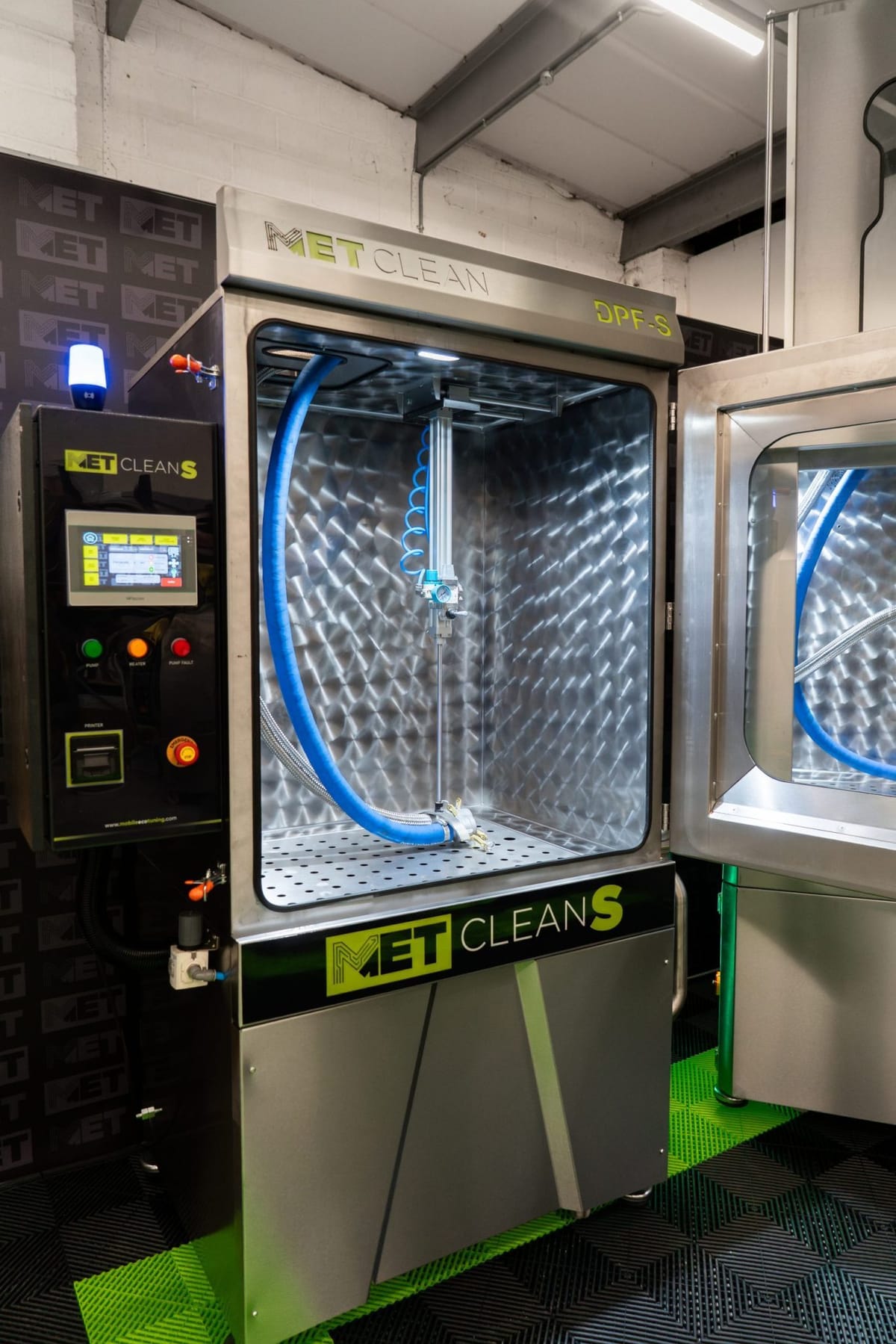
Isolate the machine first
Before any cleaning, filter change or inspection inside the machine, disconnect it from the mains and remove any filter that is still attached. Lock off the supply so the machine can’t be restarted while someone is working on it, and wear gloves, safety glasses and protective footwear.
Machines with a variable-speed pump drive hold stored charge after isolation, so work inside the control panel waits for the time stated in the fuse designation guide and is carried out only by a qualified, competent person who has proved the circuit dead. Never reach into the machine while it is running, and keep clear of pneumatic doors and clamps.
This page summarises the routine. Follow the complete procedure and safety instructions supplied with your machine for its model and revision.
Daily checks
A few minutes before the first clean of the day catches most problems before they reach a customer’s filter. The checks come straight from the conditions the operating instructions set for running the machine.
- The electrical supply is connected and the air supply reads at least what your model needs on its gauge
- The water tank is full and the machine is standing level
- Hoses, the braided wash hose and the drying hose are undamaged and their connections are tight
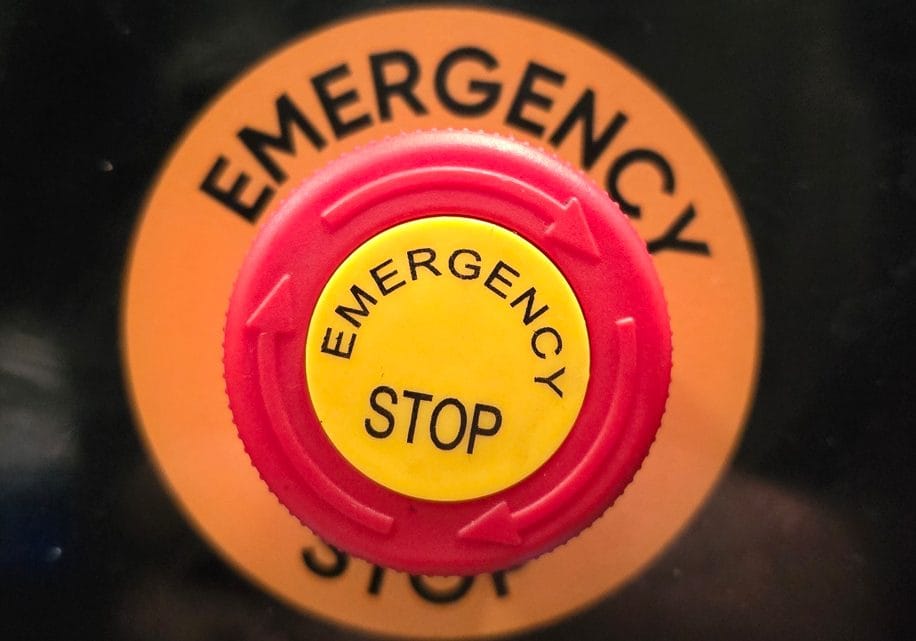
- The door, its seal and any clamp or straps work properly, and the emergency stop is released
- Electrical equipment shows no damage or wear; anything damaged is reported and not used
- The filters waiting to be cleaned are free from heavy contamination
- The alarm screen, on machines that have one, shows no unresolved stoppage
Draining and cleaning the water filters
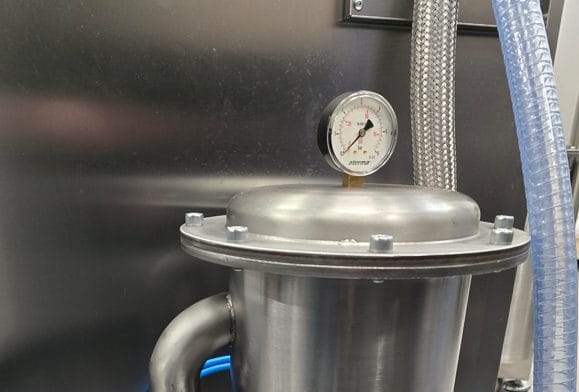
The filter housings catch the soot, ash and carbon deposits washed out of each DPF, so they need draining and cleaning as part of routine care. The METClean S and XL use a washable micro bag filter in a stainless housing, with stainless micron filters alongside it; the V uses a replaceable sock filter, reached after the machine’s water has been emptied.
Isolate and prepare
Disconnect the machine from the mains, remove any attached DPF and place a suitable container under the filter housings.
Drain the housings
Open the stop tap at the bottom of each housing for a steady flow. When the flow stops, close the taps and empty the container into your waste store. A twin-filter setup is drained the same way on both sides.
Open the housing
Remove the ring of bolts around the housing lid working diagonally, then lift off the lid and remove the screw that holds the filter in.
Clean the bag filter
Lift the micro filter out of its stainless canister slowly over a container. Turn it inside out, remove the carbon deposits and wash it through with clean water, then turn it the right way out again.
Wash the stainless filters
On machines with stainless micron filters, remove them the same way and wash them out with high- or low-pressure water.
Refit and close
Refit each filter, then reverse the removal steps to replace the lid, taking care not to damage the lid seal. Repeat for the second housing if your machine has one.
Changing the water and refilling
The wash water is reused cycle after cycle, so it gradually loads with contamination. How many cleans a fill supports depends on how dirty the filters are, their type and size, the programme used and how well the machine is maintained. When the water reaches the end of its useful service, it is changed at the same time as the filters are cleaned.
Drain the tank
With the machine isolated, drain the whole tank through the water outlet on the filter side of the machine into containers for disposal.
Clean the tank and filters
Remove settled sediment from the tank and clean the filters as described above before any fresh water goes in.
Close the valves
Check that both valves at the bottom of the filter housings are closed.
Refill and prime
Fill the tank, reconnect the supply and run the water pump manually until the correct water level is reached.
Recheck the level
Stop the pump, recheck the level and top up if needed before the next clean.
Used water and waste
Used water, sediment, sludge and spent filter elements from the machine contain the soot and ash removed from DPFs. The operating instructions ask owners to treat them with the same care as used coolant and engine oil.
Keep them in sealed, labelled containers and dispose of them through your approved waste-disposal route, using a registered waste carrier where your arrangements require it. They must never go to ground, surface water or an ordinary drain.
When to stop and call us
Stop using the machine and contact support if you find damaged electrical equipment, a leak you can’t trace to a loose connection, a heater that keeps tripping during normal cleans, or an alarm that returns after you’ve cleared it. Filters that trip the dryer through heavy saturation are a known limit of machine drying rather than a fault, and are finished in an oven or on the vehicle.
Replacement filter elements and other consumables come through the MET shop; have your model and serial number ready, because parts differ between models and revisions.