
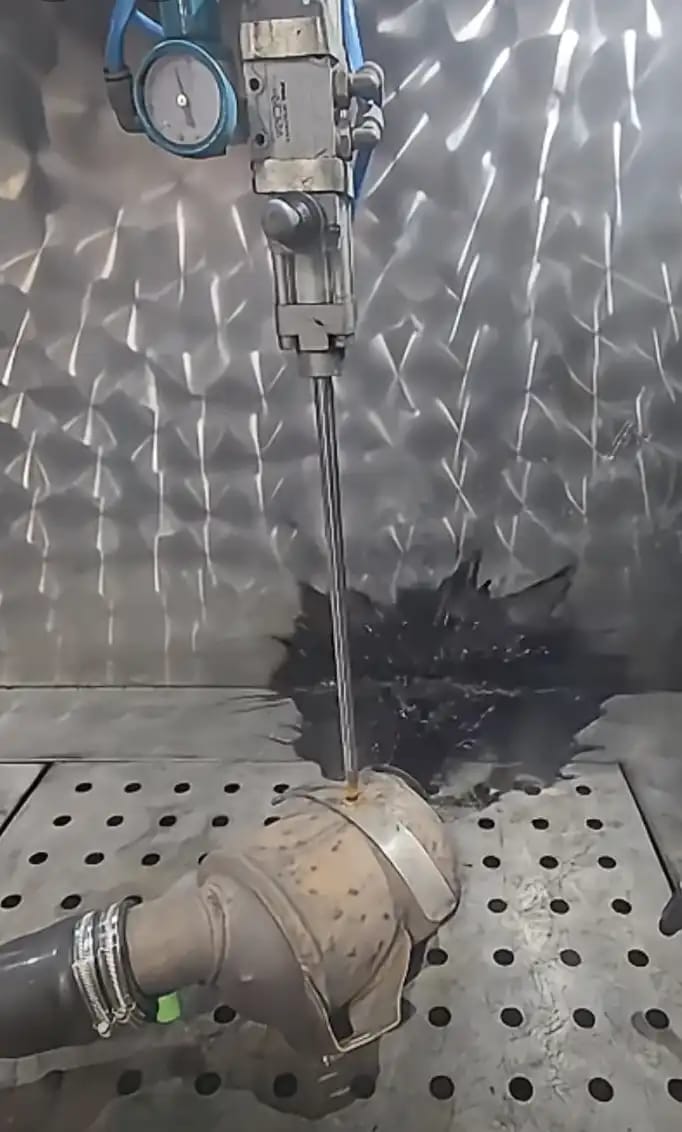
Short answer: choose a cabinet DPF cleaning machine if you want an automated or clearly controlled process that can free engineers for other billable work, be learned by different members of staff after straightforward product and safety training, and help keep the workshop cleaner, quieter and safer. The enclosure keeps the wet, dirty part of the job behind a door and makes closed-loop water, filtration and drying easier to manage. A bench machine may cost less, but that saving can be quickly swallowed by manual handling, supervision, mess, cleaning, noise and weaker control of contaminated runoff.
Bench machines attract buyers with a lower starting price and smaller footprint. The real comparison begins after purchase: technician time, spray and dirty water, workshop cleaning, runoff control, drying, repeatability and the number of jobs the business can complete without disrupting other work.
For the busy garage owner
30-second executive briefing
If you want to build a professional DPF cleaning service, choose a cabinet machine. It gives the workshop a more automated, controlled and repeatable process without the noise, mess and constant manual work associated with an open bench system.
| What matters | Cabinet | Bench |
|---|---|---|
| Frees your engineers | Once the filter is loaded and the cycle is started, the machine can handle more of the process without an engineer standing over it. Your team can get on with servicing, diagnostics and other paid work. | Cleaning is more hands-on, with the operator managing connections, changing direction and watching the process. |
| Cleaner and quieter | The filter, spray and dirty water stay inside an enclosed working area. This helps keep the workshop cleaner, reduces noise around the machine and lowers the chance of wet floors. | Open cleaning can spread dirty water and soot around the bay. Owners regularly tell us that keeping the surrounding workshop clean becomes a constant job. |
| Easier to train and use | A clear loading and operating process makes day-to-day use easier to teach. The business is less dependent on one experienced operator being available for every clean. | Results rely more heavily on the operator's attention and technique, with more manual stages to remember and complete. |
| Better control of water and waste | Contained water, filtration and controlled waste removal make it easier to run a tidy process and manage contaminated water responsibly. | An open setup needs more cleaning around the equipment and more care to stop dirty water and loosened soot spreading beyond the work area. |
Verdict
Choose a cabinet machine if DPF cleaning is going to be a proper workshop service. It is the stronger choice for automation, straightforward training, a cleaner and quieter working area, and freeing skilled engineers for other jobs. Compare METClean cabinet machines.
01 / Start with the work
Choose the right cabinet for the work you want to win
A garage can waste money by choosing on price before defining the work. The first question should be, “What filters are we actually going to clean?” A workshop handling its own car and van work has a different cabinet requirement from a trade hub receiving filters from ten garages. A fleet workshop handling HGV and plant filters has a different requirement again.
Write down the filters currently sent away, the awkward jobs being refused and the components you expect to see over the next two years. Record their size, weight and construction. Then look at the people who will operate the machine, the floor space available, the electrical supply, compressed air, lifting route and waste arrangements.
This prevents two common mistakes. The first is buying an open bench system because the price is comfortable, then discovering that the labour, noise, mess and runoff management do not suit a professional workshop. The second is buying the wrong cabinet size or control level, then paying for capacity the business cannot use or missing the automation it actually needed.
Professional car and van work
Start with an enclosed cabinet sized for the filters you see. Even at modest volume, better containment and a defined workflow help protect the rest of the workshop.
Free engineers for other work
Choose an automatic cabinet when the machine needs to run while technicians diagnose, repair or serve other customers. Count the full hands-on time, not only the wash cycle.
HGV, plant or trade volume
Choose a larger cabinet with the working space, lifting route, clamping, filtration and drying needed for heavier and more profitable components.
Our recommendation is clear
This article is published by Mobile Eco Tuning, the manufacturer of METClean machines. For a professional workshop service, we recommend a correctly sized cabinet over an open bench machine. The questions in this guide can still be applied to every supplier, including us, so you can check that the cabinet delivers the containment, automation, filtration, drying and support being promised.
02 / What the two formats mean
Why a cabinet should be the workshop default
A bench-top or open machine normally holds the DPF on an exposed frame or platform. Hoses, adaptors and restraints are fitted around the filter, and the operator can see and reach most of the process. Some bench machines are simple and manual. Others can control air and water automatically once the filter has been mounted, but the filter, hoses, runoff and contamination still remain open to the workshop.
A cabinet machine places the filter and connection inside an enclosed working area. Water and removed contamination are directed back into the machine rather than across an open bench. This physical separation is the foundation of a cleaner, quieter and more controlled workshop process. The buyer should then choose the right level of restraint, automation, filtration and drying for the workload.
| Decision point | Bench-top / open format | Cabinet / enclosed format |
|---|---|---|
| Typical starting position | A price-led entry route that leaves more of the wet process, handling and clean-up open to the workshop. | The recommended professional format for a contained, repeatable service that can grow with the business. |
| Containment and dirt | The operator works beside an exposed filter and connections. Guards, seals, covers and drainage have to control spray, dirty water and loosened contamination. | The filter, connection and wet process sit behind a door, with returning water directed into the machine. |
| Noise and workshop cleanliness | There is less of a physical barrier between the operator and pump, water and compressed-air noise. Spray, dirty hoses and open runoff can also make the surrounding workshop much harder to keep clean. | The enclosure can reduce direct exposure to noise and keep more of the wet, dirty process inside one defined area, although the complete installation still needs assessing. |
| Manual actions | Often involves more hands-on positioning, restraint, splash control, hose handling, runoff management, separate drying and cleaning of the surrounding area. Check the exact machine. | Can keep more of the loading, washing, drain-back and drying process in one defined area. The controls and restraint may still be manual on some models. |
| Environmental control | Greater care is needed to stop dirty water and removed contamination reaching the floor, open ground or an unsuitable drain. | An enclosed closed-loop layout makes collection and reuse easier, but the resulting sludge, filters and dirty water still require lawful handling. |
| Access | The open frame can appear flexible, but awkward filters still need safe support, sealing, guarding and runoff control. | A correctly sized cabinet gives the component a defined loading, restraint and cleaning area. |
| Control | Even where the wash cycle is automated, loading, guarding, runoff, drying and clear-up can remain manual. | Available with straightforward analogue control or automatic programmes that make the process easier to repeat across trained staff. |
| Drying | May use compressed air or a separate drying arrangement. | May use cold purge, hot drying or both, depending on the model. |
| Best question | How is spray, runoff and a failed seal contained? | Will the real filters fit, connect, drain and come out safely? |
Do not let the lower bench price hide the daily compromise
The strongest argument for a bench machine is normally the lower purchase price and smaller footprint. That may get equipment through the door, but it does not remove the need for space around the filter, safe support, splash protection, runoff collection, drying and cleaning. If the aim is to build a professional service rather than perform the occasional clean, buy for the working process you want every day, not the cheapest machine on day one.
The practical downsides of an open bench machine
The lower price and smaller footprint can come with more work around the machine. Because the filter and connections remain open to the workshop, the operator may be more directly exposed to noise, spray, dirty water and the contamination being removed. One of the complaints MET regularly hears from workshops using open bench equipment is how dirty the surrounding area becomes and how difficult it is to keep the workshop clean and presentable. A leaking seal or badly positioned guard can turn a cleaning job into floor cleaning as well.
Bench cleaning can also involve more manual actions: positioning and restraining the filter, fitting splash protection, moving hoses, watching the return flow, managing runoff, arranging a separate drying stage and cleaning the working area afterwards. An automatic wash cycle reduces some of that involvement, but it does not automatically enclose the dirty part of the job or remove the setup and clear-up work.
There is an environmental control issue too. Dirty water, soot, ash and oily residue must remain contained and must not be allowed to reach open ground or a surface-water drain. A bench system can be operated responsibly, but the buyer needs to see exactly how the supplier expects the workshop to capture the runoff, filter the water, store the residue and arrange its lawful removal. If that process relies mainly on the operator improvising around an open bench, include the extra risk and labour in the buying decision.
A cabinet earns its place on every clean
A cabinet gives the business a defined wet area, routes water back into filtration and keeps the working filter behind a physical barrier. Choose an automatic model and the same platform can also combine repeatable programmes, clamped loading, testing and hot drying. The result is not merely a metal box. It is an organised process that is easier to teach, easier to repeat and less disruptive to the other work happening in the garage.
03 / Containment and workshop condition
Think about what happens when the seal is not perfect
Every wet cleaning system depends on connections, seals and the condition of the filter housing. A restricted filter can resist the initial flow. A corroded casing or awkward flange may not seal first time. The useful question is not whether a demonstration stays clean when everything is ideal. It is where the water goes when something is not ideal.
On an open machine, guarding and splash control need careful inspection. The operator is closer to the filter, connections and contamination being washed out, so look at the side facing the operator, the floor around the machine and the route taken by the returning water. Ask the demonstrator to show how a poor seal is detected and stopped. A magnetic cover or local guard can reduce mess, but it must suit the size and position of the actual filter.
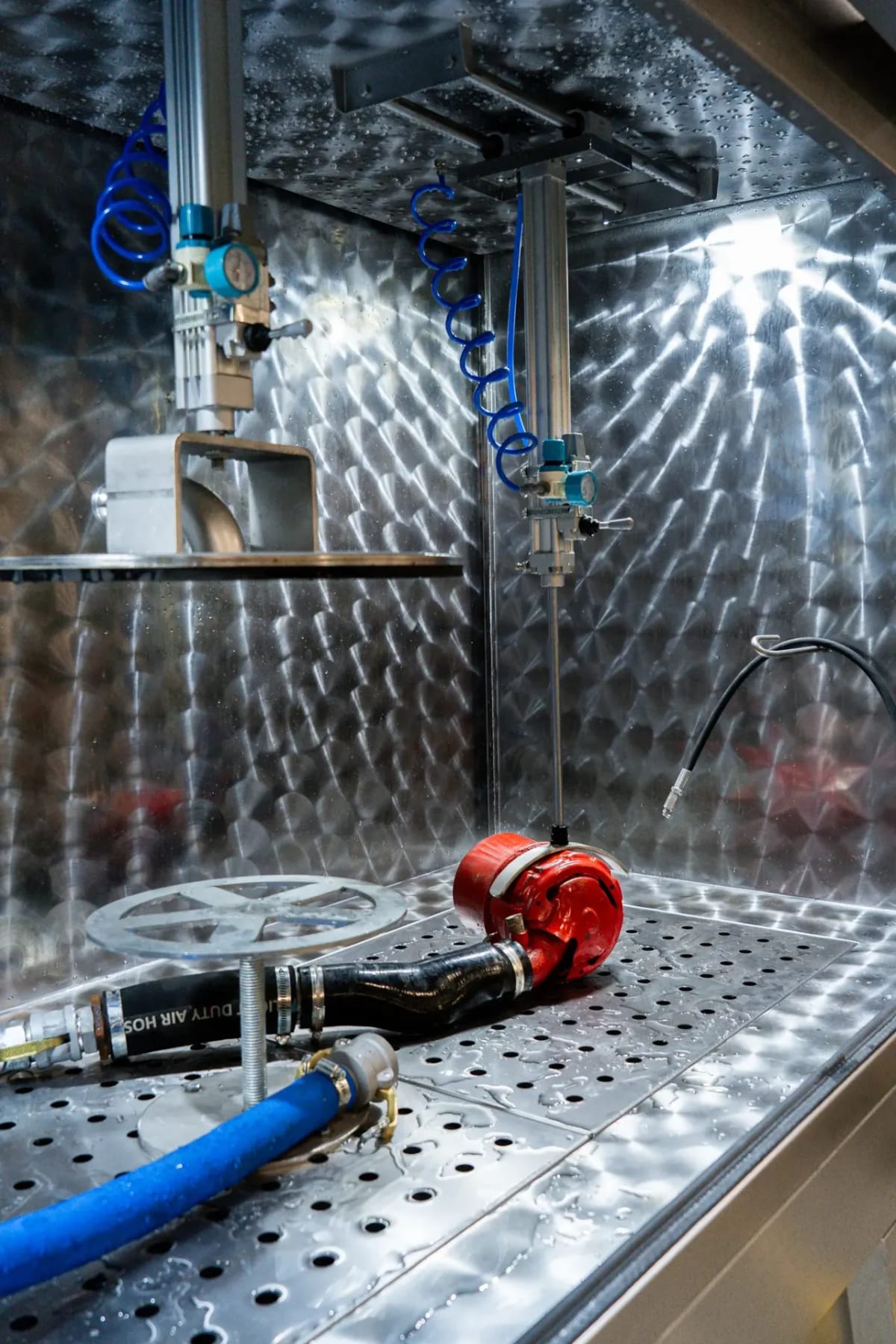
A cabinet puts the connection inside an enclosed chamber. That gives the operator a physical barrier and allows runoff to return to the machine. It does not mean the floor can never become wet or that the machine needs no risk assessment. The door seal, pipework, tank, drain-back route and loading method still need inspection and maintenance.
Ask to see the awkward demonstration
A clean, straight filter with an easy flange proves very little. Ask how the machine handles an angled pipe, a heavy combined unit and a connection that needs a different adaptor. Watch where the filter is supported and where water would go if the seal leaked.
04 / Filtration, water and waste
Closed loop does not mean the waste disappears
A closed-loop machine holds water in a tank, passes it through the DPF and returns it through filtration for reuse. This can reduce fresh-water use and makes the wet process easier to contain. It does not create endless clean water. Soot, ash, oil residue and other contamination still collect in the tank, filters and sediment.
Ask the supplier to open the filtration system. Count the actual stages. Find out which parts are washable, which are replaced, what protects the pump and how the operator decides that the water is no longer suitable for another job. “Seven-stage” or “multi-stage” is only helpful when each stage and its maintenance are explained.
MET’s current expected range is 20–30 expected cleaning cycles per tank fill for the E and 20–30 expected for the V, and 30–40 expected for the S and 30–40 expected for the XL Multi+. Those are planning ranges, not guarantees. A badly oil-contaminated component or an unusually dirty batch can load the water and filters sooner. Filtration and water management explains how METClean filters and reuses its water.
Follow the contamination from the filter to its final destination
The removed material becomes business waste. GOV.UK states that commercial waste must be stored safely, transferred correctly and handled through an authorised route. Its pollution-prevention guidance also says contaminated water should be recycled, removed by a registered waste carrier or discharged to a foul or combined drain only with the required permission. It must not be sent into a surface-water drain. This is a particular point to test on an open bench machine, where runoff, splash and sediment may depend more heavily on separate guarding, trays, containers and careful operator handling.
A responsible machine purchase therefore includes suitable containers, maintenance instructions, waste classification and a collection or permitted disposal route. The cabinet can contain the process, but the business still owns the waste duty.
- Ask where the heavy material settles. The operator needs a safe way to remove it without spreading it across the floor.
- Ask what catches fine material. Price the bags, cartridges or other consumables and check whether washable filters eventually require replacement.
- Ask how the tank is emptied and cleaned. A large tank that is difficult to access can create more labour than expected.
- Ask what happens to contaminated water. “Closed loop” is not a disposal instruction.
05 / Labour and automation
Cabinet automation should free your engineers for other work
The shortest cycle is not automatically the cheapest process. Start the clock when the filter reaches the machine and stop it after unloading and routine maintenance. Include inspection, choosing adaptors, lifting, restraint, connecting, washing, rinsing where required, drying and cleaning the machine.
Some bench machines can control the water and air cycle once set up, but the automatic cycle is only one part of the job. The operator may still have to position and strap the filter, fit guards, move hoses, watch for leaks, manage runoff, transfer the component for drying and clean the open working area. An automatic cabinet keeps the dirty process contained while its programme runs, allowing the engineer to return to diagnosis, repair work or another customer instead of managing the machine and its surroundings.
Automation should make the process easier for the whole team
A DPF service should not depend on the one technician who knows all the tricks. A well-designed automatic cabinet gives trained staff a clear loading method, a defined programme and a contained working area. After proper product and safety training, different team members can follow the same process without learning a collection of improvised steps around an open bench.
Do not assume “unattended” means “ignored”. The operator still needs to inspect the filter, load it safely, choose a suitable programme and respond if the machine reports a problem. Follow the supplied operating instructions and the workshop’s risk assessment.
The honest productivity calculation
Record the hands-on minutes for a representative filter on every shortlisted machine. Multiply that by the number of expected weekly jobs and the real labour cost. Then check what useful work the technician can do while an automatic cycle runs. A claimed labour saving only becomes real when the rest of the workshop is organised to use the released time.
Choose the cabinet control level deliberately
The METClean E provides cabinet containment with straightforward analogue controls and strap restraint. The METClean S adds touchscreen programmes, pneumatic clamping and hot drying for workshops that want to reduce hands-on work further. An automated bench can run its wash cycle without constant input, but it remains an open bench: automation does not enclose the filter, contain the dirty working area or remove every setup and clear-up task.
06 / Restraint and handling
The filter must be supported, sealed and removed without damage
A DPF may be heavy, hot from previous work, awkwardly shaped or fitted with vulnerable sensor bosses. The loading system should hold the casing securely without crushing a flange, stressing a pipe or allowing the component to move when flow starts.
Manual straps can work well when they are suitable, maintained and applied correctly. They also introduce operator judgement: too loose can leak or move, while poor positioning or excessive force can damage the filter. A pneumatic clamp can make restraint quicker and more repeatable, but only when its contact point and pressure suit the component.
Within the current METClean range, the E and V use strap restraint, while the S and XL Multi+ clamp the filter in the cabinet. This is an important example of why “cabinet” should not be treated as meaning “pneumatic”.
Large filters need a handling plan
For HGV, bus and plant work, chamber size is only one part of the answer. Ask how the filter reaches the machine, how it crosses the door opening, what supports its weight and how the operator connects the hose without working in an awkward posture. Allow room for a trolley, lift or other suitable handling aid.
A long unit may fit through the opening but still be impossible to connect or restrain properly. Measure the usable working area, not only the outside of the machine or the largest dimension in a brochure.
07 / Drying and completion
A wet DPF is not a finished job
Drying is often missing from headline cycle times. Water can remain inside complex filter and catalyst assemblies after the visible surface looks dry. Before buying, establish whether the machine uses compressed-air purge, heated drying or both, and whether the filter’s construction may require further drying after it leaves the machine.
A cabinet can retain and direct heated air around the component, but not every cabinet has hot drying. The current METClean E and V use a compressed-air cold purge. The S and XL Multi+ add hot drying as well as a cold purge. With a bench machine, drying can become another separate arrangement, another component move and another source of discharged moisture in the working area.
Testing helps, but it does not overrule diagnosis
Pressure or flow readings can help compare restriction before and after cleaning. They do not prove that a cracked, melted or oil-soaked filter is suitable to return to service, and they do not identify the vehicle fault that caused the blockage. Visual inspection, vehicle diagnosis and sensible rejection criteria still matter.
Ask what the test measures, how the reading is affected by filter size and temperature, and what the supplier regards as a failed or inconclusive result. A result should support the technician’s decision rather than become a certificate that hides a damaged component. See pressure testing and reporting.
08 / Capacity and adaptability
Choose a cabinet large enough for the work you want
An open frame is sometimes sold as unlimited flexibility because there are no cabinet walls. In practice, the component still needs safe support, a suitable connection, splash protection and proper runoff containment. Balancing a heavy exhaust assembly across an undersized open bench is not useful capacity.
A cabinet has fixed boundaries, so the buyer must check the opening, working space, restraint and hose route. A well-sized cabinet can take awkward units while giving them a stable working area. A cabinet that is too small can force the workshop to reject the job or consider cutting pipework, which adds labour and changes the component.
Do not buy capacity you will never use
A larger cabinet brings a larger footprint, more water, different utilities and a higher investment. That can be worthwhile for HGV, plant, agricultural or fleet work, but it does not automatically improve ordinary car and van cleaning. Match the machine to the profitable jobs the business can realistically win.
Confirm every unusual component before promising the job
Combined DPF, SCR and catalyst assemblies vary enormously. Send photographs, measurements and part details to the supplier before assuming suitability. The supplier should confirm the adaptor, loading position and process for the exact unit rather than simply saying the chamber is large.
09 / Mobile cleaning
Mobile work changes the containment and payload questions
A mobile business has to carry the machine, water and equipment safely, provide power and compressed air, contain dirty water and leave enough room to work. A bench machine can be transported, but the operator still needs a controlled place to mount the filter and manage runoff. Working outside also introduces weather, uneven ground and presentation at the customer’s premises.
A compact cabinet such as the METClean V is designed around collection, clean and return work from a van. Its closed cabinet contains the wet working area and its simple controls, strap loading and cold-air drying suit a mobile setup. Before fitting one, check that the van can legally carry the machine, water and other equipment without exceeding its total or axle weight limits. Make sure the power supply and airflow inside the van are suitable, secure the machine properly and tell the insurer about the conversion.
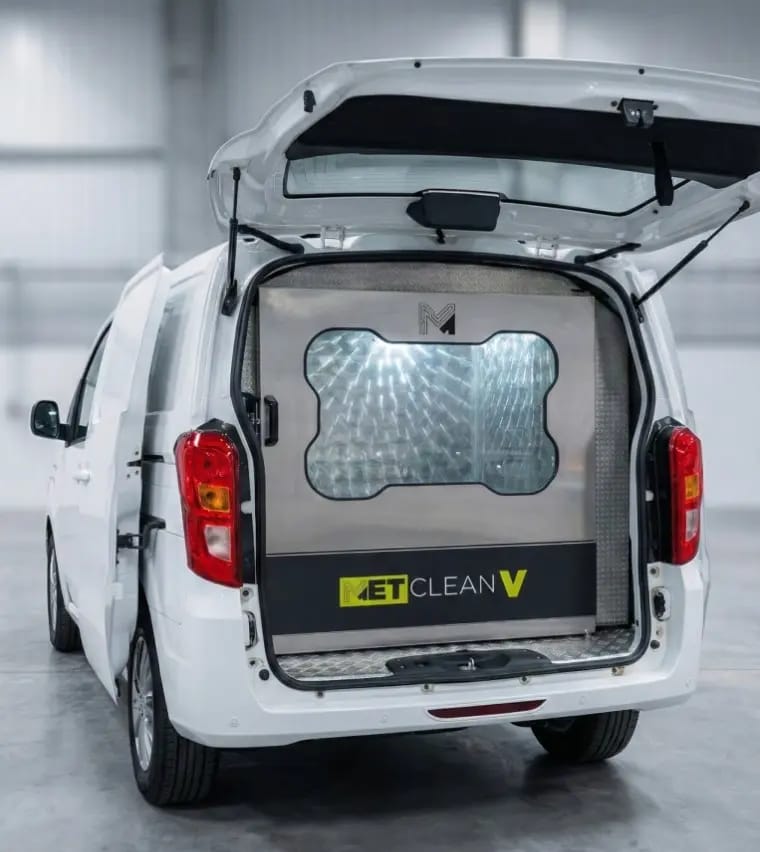
The detailed guide to starting a mobile DPF cleaning business covers van choice, power, payload, collection routes, waste and the trade-hub model in more depth.
10 / Noise, safety and compliance
Do not turn one decibel figure into a safety certificate
An enclosure can reduce direct noise from pumps, water and compressed-air bursts. With an open bench machine there is less of a physical barrier between those sound sources and the operator, so noise is a genuine comparison point rather than a cosmetic difference. The actual exposure still depends on the complete machine, the building, the length of each cycle and how often it runs. A supplier’s single sound figure is not the same as a workshop noise assessment.
HSE’s current guidance uses daily or weekly exposure action values of 80 dB(A) and 85 dB(A). These are exposure values, not a simple pass or fail label for one machine. Ask where and how the machine was measured, then include it in the site’s own assessment.
The same practical approach applies to spray, chemicals, hot surfaces, pressurised connections and moving restraints. Ask for operating instructions, installation requirements, maintenance schedules, the machine identification and the Declaration of Conformity that belongs to the exact supplied unit. A CE or UKCA mark is not a substitute for safe installation, training or daily checks.
- Door and interlocks: ask what prevents a cycle starting or continuing when the working area is open.
- Pressure and hoses: inspect ratings, condition, restraint and the route taken if a connection fails.
- Hot surfaces and drying: establish when the operator can safely touch and remove the component.
- Loading: assess the heaviest likely filter and the equipment needed to move it.
- Maintenance isolation: ask how electrical, pneumatic and stored-pressure energy are made safe before work.
11 / Ownership cost
Compare five years of work, not two purchase prices
A bench machine may cost less to buy and install, but purchase price is only one line in the calculation. A suitable cabinet can save supervision, surrounding clean-up, handling and drying time while supporting a cleaner process and a higher volume. The cheapest machine can become the expensive choice when engineers keep losing time to manual actions and the workshop keeps absorbing the mess.
Build one comparison sheet and use it for every machine. Include the purchase or total finance cost, delivery, installation, electrical work, compressor upgrades, lifting equipment, adaptors, cleaning product, filters, water, power, waste, planned servicing and likely downtime. Add labour for the full job rather than only the wash.
Cost to start
Machine, delivery, site preparation, utilities, adaptors, training, handling equipment and initial consumables.
Cost per usable job
Direct consumables, operator time, drying, waste, maintenance and any filters that need a second cycle.
Cost of downtime
Lost bookings, outsourced work, filters waiting on ramps, engineer travel and the time required to obtain parts.
Work out how many cleans will pay for the machine
Start with what you charge for an average DPF clean. Take away the chemicals, electricity, water, waste disposal and any other costs you pay each time you do a clean. The amount left is what that job puts towards paying for the machine. Divide the full cost of buying and installing the machine by that amount to estimate how many cleans are needed to recover your investment. Base the plan on the number of jobs you can realistically expect in a quiet month, not your busiest possible month.
The METClean profit and payback calculator helps compare different prices, job volumes and finance periods. The guide to DPF cleaning machine grants, finance and tax relief explains other funding routes. Neither should replace a quotation, finance terms, accountant advice or your own cash-flow forecast.
12 / Apply the test to METClean
Choose the METClean cabinet that matches your workload
METClean’s core professional range is built around cabinets because containment, repeatability and workshop condition matter on every clean. The choice is then whether the business needs straightforward cabinet operation, greater automation, a mobile installation or heavy-duty capacity.
| Model | Format | Best suited to | Important compromise |
|---|---|---|---|
| METClean E | Car and van cabinet | A garage wanting an enclosed, closed-loop cabinet with straightforward analogue operation. | Uses manual strap restraint and compressed-air cold purge rather than the S model’s clamping, hot drying and integrated testing. |
| METClean S | Touchscreen car and van cabinet | A busier workshop wanting touchscreen programmes, pneumatic clamping, enhanced filtration and hot drying. | Higher investment and greater site requirements than the E, in return for more automation and a more complete in-cabinet process. |
| METClean V | Compact mobile cabinet | An established mobile service offering collection, clean and return work. | Check that the van can legally carry the machine, water and equipment, then provide suitable power and air, secure the machine and plan how dirty water and waste will be handled. |
| METClean XL Multi+ | Large-format cabinet | HGV, bus, plant, agricultural and wider component work needing more working space. | Its size, utilities and cost are only justified when the business can win and handle the larger work. |
Why METClean uses cabinet machines as the core workshop range
For regular workshop cleaning, METClean favours cabinets because the filter, connection and returning water sit inside a defined working area. The enclosed chamber supports closed-loop water management, provides a physical barrier and gives the E, S and XL Multi+ a clear route from loading to cleaning and drying.
The reason is practical. A cabinet separates the wet, dirty process from the rest of the workshop and provides a better foundation for filtration, automation and drying. Our recommendation is to choose the correctly sized cabinet for a cleaner, quieter and more professional operation, then choose the control level that matches how much engineer time the business wants to release.
For full model-by-model specifications, compare the current machines on the METClean manufacturer website and confirm the final configuration in the written quotation.
13 / Claims and myths
Five shortcuts that can lead to the wrong purchase
“A cabinet is always automatic”
No. The enclosure and the controls are separate decisions. Ask which stages start automatically, what the operator changes manually and whether the machine can be adjusted for an unfamiliar filter.
“An automatic bench machine does the same job as an automatic cabinet”
No. A bench machine may automate its water and air cycle, but the filter, hoses and dirty process remain open to the workshop. Automation does not provide cabinet containment, reduce surrounding spray by itself or remove the manual work around guarding, runoff, separate drying and clear-up.
“Open means it will take any size”
No. The component still needs to be supported, sealed and handled safely. An open frame removes walls, but it does not remove weight, balance, hose routing or containment.
“Closed loop means there is no waste”
No. Closed loop means water is captured and reused through filtration. Contamination still accumulates and eventually leaves as dirty water, sediment, spent cleaning product or used filters.
“The machine with the highest pressure cleans best”
No. Flow control, pulsing, direction, connection, contact time and protection of the ceramic all matter. Ask how the machine starts against a restricted core and how intensity is adjusted.
The right sales answer includes a limitation
A supplier should be able to say which damaged filters must be rejected, which components need confirmation and which cabinet size and automation level suit the workload. A clear limitation makes the recommendation more useful, not less convincing.
14 / Demonstration process
How to choose the right cabinet and prove the difference
Take the same representative component and the same questions to every supplier. If a bench machine is still being considered on price, insist on seeing its entire setup, wash, drying and clear-up beside the complete cabinet process. A structured demonstration is more useful than comparing edited videos or headline specifications.
- Choose a realistic filter. Use a size, shape and condition that represents the work you expect, not only the supplier’s easiest demonstration piece.
- Inspect before loading. Agree whether the component is serviceable and ask what damage would cause the operator to reject it.
- Watch the loading. Time the lift, support, restraint, adaptor choice and sealing. Check what could be damaged by poor positioning.
- Follow the whole wet route. Identify where clean water starts, where returning water goes, each filtration stage and what would happen after a leaking connection.
- Ask who controls the cycle. Find out which parts are automatic, which require attendance and how settings change for different filters.
- Include drying. Watch the cold purge, hot drying or external drying step and include it in the real completion time.
- Perform routine maintenance. Open the filters, inspect the tank access and ask the operator to show the normal clean-down rather than merely describing it.
- Price the exact package. Record the machine, adaptors, delivery, installation, training, utilities, warranty and service parts so both quotations include the same things.
You can use this process during a METClean demonstration. Bring photographs, measurements or an actual filter if there is an awkward job you want the machine to handle.
15 / The business around the machine
A good machine still needs customers, bookings and records
The equipment decision is only one part of the service. The business needs to be found by local drivers and trade garages, accept bookings while the team is on the tools, keep online and telephone work in one diary and produce customer invoices and useful finance records.
METBooker for DPF specialists can provide an optimised website, online booking, management of online and manual bookings, vehicle lookup, customer agreements, invoices and bookkeeping records. Add-ons can also help a workshop offer related services during booking. It is separate from the machine purchase, but it helps turn the technical capability into a visible and organised service.
Use agreements and clear customer information to record what has been authorised, what the clean can and cannot fix, and what happens when inspection shows that a filter is unsuitable. The process should make the customer journey clearer without pretending the booking system replaces technical judgement or legal advice.
16 / Frequently asked questions
Cabinet DPF cleaning machine FAQs
What is the main difference between a cabinet and bench DPF cleaning machine?
A bench machine leaves the filter, hoses and wet cleaning process open to the workshop. A cabinet places them inside an enclosed chamber, creating the cleaner, quieter and more controlled foundation we recommend for a professional service. Buyers should then compare the automation, restraint, filtration, drying and capacity of each cabinet.
Why is a cabinet DPF cleaning machine recommended over a bench machine?
A cabinet keeps the filter, spray, dirty water and returning contamination inside a defined enclosure. This supports a cleaner and quieter workshop, better runoff control and a process that is easier to standardise. Choose an automatic cabinet when the aim is also to free engineers for other work while the cleaning and drying programme runs.
Can a bench DPF machine run automatically?
Yes, but automating the wash cycle does not turn an open bench into a cabinet. Loading, guarding, exposed hoses, runoff, workshop cleaning and separate drying may still require manual work. Compare the complete job, not only what happens after the start button is pressed.
Do bench DPF cleaning machines make the workshop dirty?
Yes, this is a common complaint MET hears from workshops using open bench equipment. The filter, hoses and wet cleaning process remain exposed, so spray, dirty water, loosened soot and ash, handling and hose movement can spread mess beyond the machine. Buyers should ask to see the full setup, cycle and clear-up, not only a carefully filmed wash.
Does a cabinet machine always use pneumatic clamping?
No. The METClean E and V are cabinet machines that use strap restraint. The METClean S and XL Multi+ use pneumatic clamping. Every METClean runs its cycle automatically. Cabinet format and restraint method are separate specifications.
Does closed-loop DPF cleaning produce no waste?
No. Closed loop allows working water to be filtered and reused, but removed soot, ash, oil residue and other contamination collect in the water, filters and sediment. The business still needs an approved storage and disposal route.
Which METClean machine is best for a small garage?
The METClean E is the recommended entry cabinet for a smaller garage cleaning car and van filters. Choose the S where touchscreen programmes, pneumatic clamping and hot drying are worth the additional investment. Both keep the wet cleaning process inside a defined cabinet rather than exposing it to the wider workshop.
Which METClean cabinet is best for a busy car and van workshop?
The METClean S is intended for regular car and van work where touchscreen programmes, pneumatic clamping, enhanced filtration and hot drying justify the higher investment over the E.
Which machine should be considered for HGV or plant filters?
The METClean XL Multi+ is the large-format cabinet in the current range. Suitability still depends on the exact component dimensions, weight, connection and workshop handling plan.
Can a cabinet DPF machine be installed in a van?
Yes. The METClean V is a compact cabinet designed around mobile collection, clean and return work. Before fitting it, check that the van can legally carry the machine, water and equipment. It also needs suitable power and compressed air, enough airflow, a secure installation and insurance that covers the conversion.
What should I ask during a DPF machine demonstration?
Ask to see a representative filter inspected, loaded, restrained, cleaned, dried and unloaded. Follow the water and contamination through the filtration, perform routine maintenance and obtain a written price for the exact package, utilities, training, warranty and exclusions.
Sources and review standard
What this guide is based on
This guide was reviewed on 14 October 2026 against the current METClean product records, operating material, live shop pages, the METClean manufacturer site and current HSE and GOV.UK guidance. Machine specifications, prices, finance and availability can change, so confirm the exact supplied configuration and written quotation before purchasing.
- METClean: compare current machines
- METClean: filtration and water management
- Mobile Eco Tuning: current off-vehicle DPF cleaning range
- METClean: complete DPF cleaning machine buyer’s guide
- METBooker for DPF specialists
- HSE: employers’ responsibilities for noise at work
- HSE: vehicle exhaust emissions in motor-vehicle repair
- GOV.UK: disposing of business or commercial waste
- GOV.UK: pollution prevention for businesses
Important: this is general technical and business information. It is not individual engineering, health and safety, environmental, legal, insurance, tax or financial advice.
Ready to choose your cabinet?
Bring Mobile Eco Tuning the filters you actually want to clean
Tell the team what vehicles you work on, which filters you send away, how many jobs you expect and what space, power and air are already available. Mobile Eco Tuning can recommend the right E, S, V or XL Multi+ cabinet and demonstrate the complete process, including loading, containment, filtration, drying and clear-up.