
The trade hub model
Most independent garages see blocked filters regularly but don’t have a cleaning machine. Today they either fit a new filter, which many customers baulk at, or send the filter away and lose the bay while they wait. A mobile operator with a machine in a van fills that gap: you arrive, clean the filter the garage has removed, and hand it back the same visit.
The garage removes and refits, keeps its customer and adds its own margin; you charge the garage a trade rate and move on to the next site. MET calls this a trade hub. Your customers are businesses, so a handful of reliable garages matter more than one-off retail jobs, although many operators take retail work too.
It suits two kinds of people. New entrants who want a service business with a clear customer base, and mobile mechanics or remappers who already visit garages and want to add a service they currently pass on to someone else.
The METClean V, the van and the power
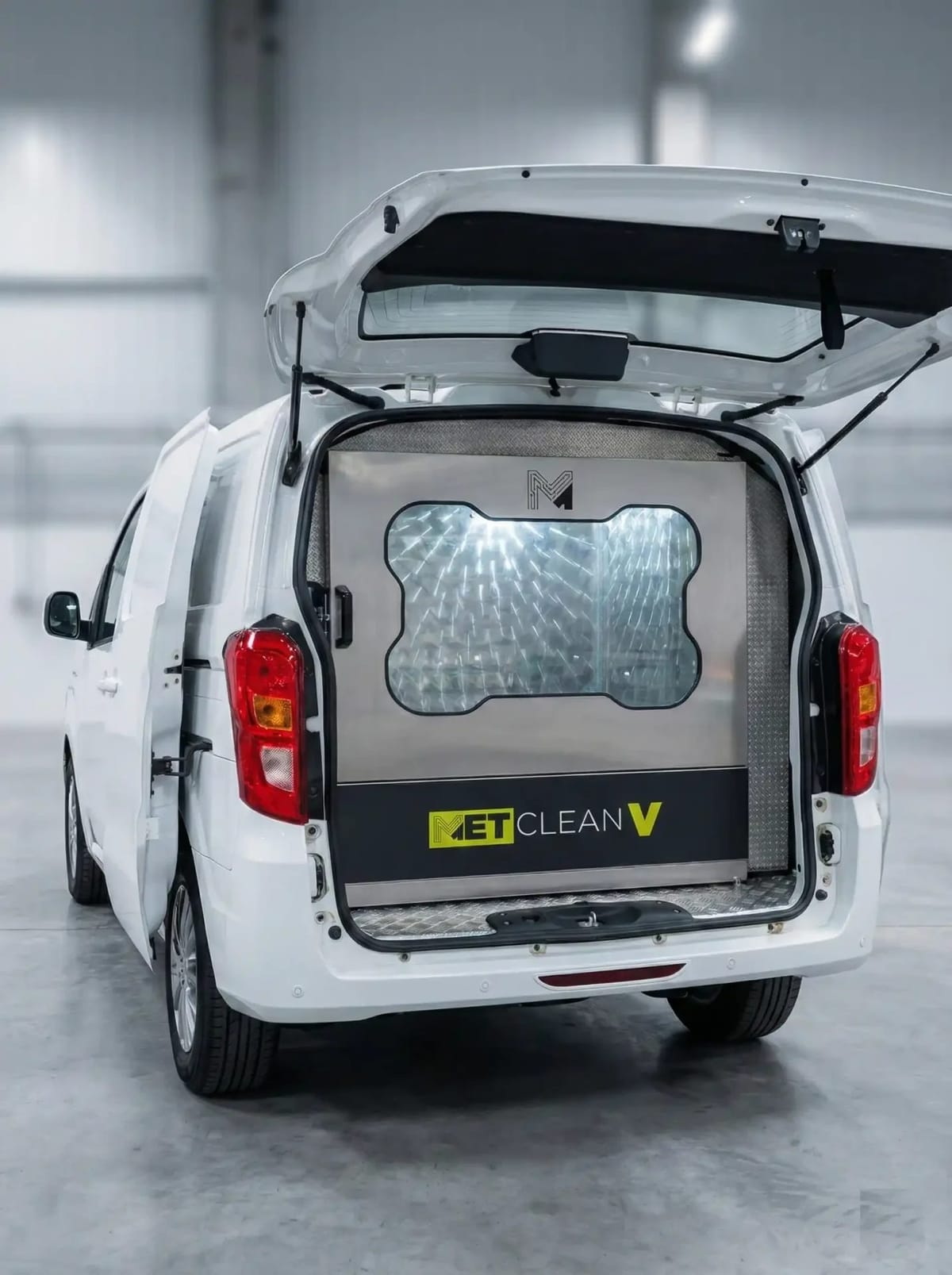
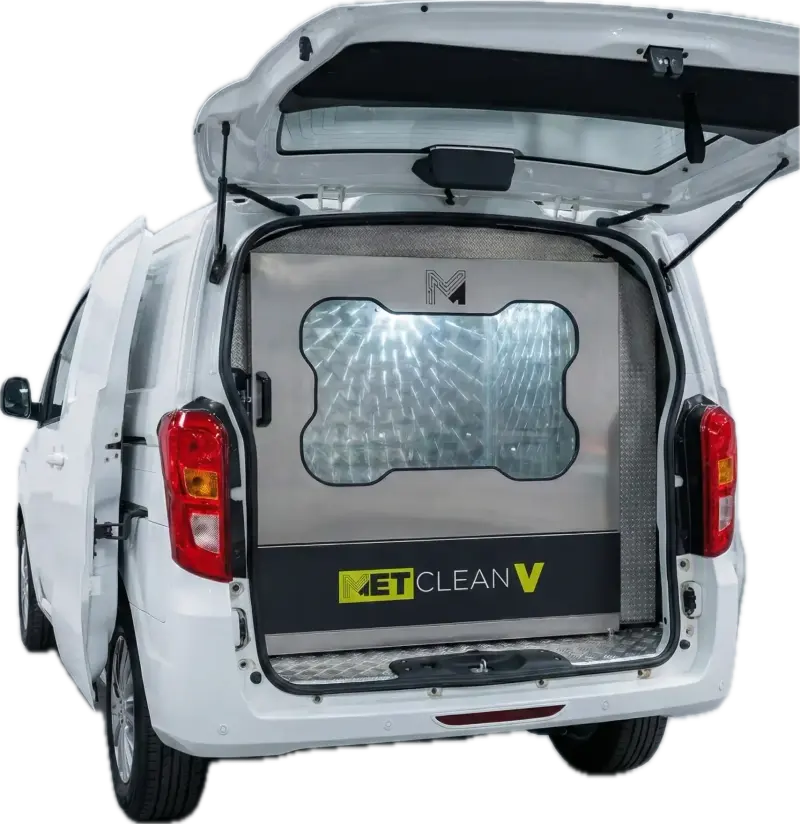
The METClean V is the machine MET designed for vans: a compact cabinet with analogue controls, an automatic wash and a cold-air dry, with the same closed-loop water system as the workshop machines. A medium-sized panel van is the usual starting point. Payload, axle loads, anchoring and how water is contained on the move are checked for your particular van before you order.
There are two ways to power it. The simplest is plugging into the garage’s mains supply at each site, which most workshops can offer. The more independent option is an on-board inverter and battery, charged from the van while you drive between jobs, so you are not relying on a socket. Either way, the supply needs the protection the manual sets out, and an inverter system has to be sized for a full wash and dry, not just the start.
The machine also needs compressed air for the clamps and the dry, and its tank of water. Many garages will let you use their compressor; carrying your own removes that dependency but takes space and power. The figures are below, and some still await approval.
- Electrical supply
- Awaiting approval
- Air inlet pressure
- 5–8 bar
- External dimensions
- Awaiting approval
- Operating weight
- 350 kg
- Cleans per tank fill
- 20–30 expected
The job at the garage and a day on the route
A visit follows the same pattern each time. The wash runs on its own once started, which is what makes several garages in a day workable.
Check the filter and the reason it blocked
Look the filter over for cracks, melting or oil, and ask the garage what caused the blockage. A filter that hasn’t had its root cause fixed will come back.
Load and wash
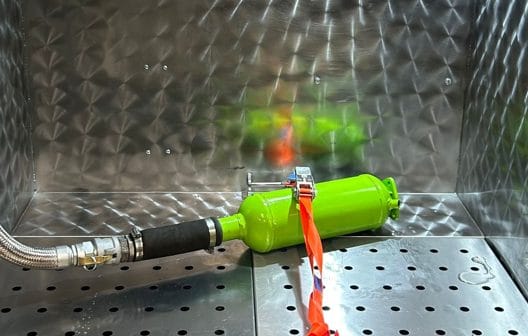
Fit the adaptor so the filter is washed against the exhaust flow, strap it in, close the door and start the cycle.
Use the wash time
While the machine runs, talk the garage through the job, plan the next visit or, if you also remap, work on a vehicle on site.
Dry, hand back and invoice
Dry with compressed air, return the filter for refitting and invoice the garage. Filters that stay damp, mainly combined filter and catalyst units, finish drying on the vehicle.
Planning a route
A working day is a loop of nearby garages: checks and charging before you leave, a clean at each stop, and the van’s alternator topping up the battery between sites if you run on an inverter. Grouping regular customers by area keeps travel, which earns nothing, to a minimum. How many stops fit depends on the filters, the distances and the garages, so build the plan from your own area rather than anyone’s example.
Waste, insurance and the legal side
The used water, sediment and spent filter elements from a DPF clean are waste, and moving them from site to site makes you a waste carrier. Register with the Environment Agency as a lower-tier waste carrier before you start, and keep the transfer records your licensed waste contractor gives you when they collect.
On the road, the dirty water and sediment stay sealed in the machine’s tank and filter housings; nothing is emptied at a garage or into a drain. MET’s guide describes returning to base once a week to empty the tank, send the water, sediment and filter elements through your licensed waste route, clean the tank and filters, and refill.
The rest of the set-up is standard for a service business, and MET’s checklist lists it. Your insurer and accountant will tell you the levels of cover and the structure that suit you.
- A limited company and a separate business bank account
- Public liability insurance
- Professional indemnity cover for the advice and work you do on customers’ parts
- Motor trade cover for working on and around customers’ vehicles
- Cover for the machine and the van fit-out
- Lower-tier waste carrier registration, and the transfer records from your waste contractor
Training, marketing and a second service
MET trains new owners on the operating sequence, safety, the emergency stop and the filter maintenance that keeps the water usable. The machine runs its cycle automatically, but you still inspect each filter, judge whether it is worth cleaning and understand why it blocked, so a diagnostic background helps. MET’s checklist points to its DPF technician guide for the diagnostic side.
Garages need to know you exist. The checklist’s marketing steps are practical: clear van signage, a simple mobile-friendly page with your area and how to book, online booking, and visiting independent garages in person to offer a trade rate. MET’s own booking platform, METBooker, is built for remapping and DPF businesses: it takes bookings and deposits around the clock, syncs with your calendar, looks up vehicles and sends invoices. A MET leaflet drop pack is available for introducing yourself to local garages, and photos of filters before and after cleaning make a good case on social media.
Remapping pairs naturally with cleaning, because you are already at the garage and the wash leaves time to work. If you have the tools and training, it can add income to the same visits; if you remap already, cleaning adds a reason for garages to call you.
- METBooker
Online bookings, deposits, calendar sync, vehicle lookup and invoicing for remapping and DPF cleaning businesses, from Mobile Eco Tuning.
- MET business plan checklist
MET’s seven-phase checklist for a mobile cleaning business, from company set-up, insurance and waste registration through the van, equipment, training, online presence and garage outreach to tracking profitability.
Mistakes that cost operators
- Cleaning without fixing the cause
- A filter blocked by a faulty sensor, injector, EGR valve or turbo will block again. Make sure the garage has dealt with the cause, or the repeat job damages your reputation.
- Waiting for work to arrive
- A van with a machine earns nothing parked. Line up garages before the machine arrives and keep visiting them; trade relationships take time to build.
- Undersizing air, power or water
- A compressor that can’t keep up, an inverter sized for the start rather than the whole cycle, or running short of water slows every job and every day.
- Treating the business plan as a forecast
- Examples in any guide, including MET’s, are not your numbers. Test your prices and volumes in the calculator and change one figure at a time.
Common questions
Do I need mechanical skills?
You don’t need to be a master technician to run the machine, and MET trains you on it. You do need to inspect filters, recognise damage and understand why filters block, so experience of diesel diagnostics makes the business much easier to run well.
Can I add this to an existing mobile business?
Yes, if your van has the payload and space for the machine, its water and the power and air arrangement. Many operators add cleaning to remapping or mobile mechanic work.
Do I need power in the van?
Not if the garages you visit let you use their mains supply. An inverter and battery system makes you independent of the site, at the cost of space, weight and installation.
Which filters can the V clean?
Car and light commercial vehicle filters, cleaned off the vehicle. If you are unsure about a particular filter, such as a combined unit or an unusual shape, check with MET before cleaning it.
How long does a visit take?
It depends on the filter and how blocked it is. The machine stops at the end of the time set on its dial, and drying and handover follow. Ask MET for a demonstration on filters like yours.
Can I clean truck filters?
Not with the V. Truck, bus and plant filters need a larger machine such as the XL Multi+, which is usually a workshop installation.
Planning a mobile cleaning business?
Ask for a quote and we’ll go through your van, power, air, water and local market with you.